
I went to Rome for my 45th birthday while on three months of annual leave from my career as a CEO. I was supposed to go back to work, but somewhere between a Roman speakeasy, a few drinks and a tattoo, I decided that the life I’d spent decades building wasn’t necessarily the one I wanted to keep living.
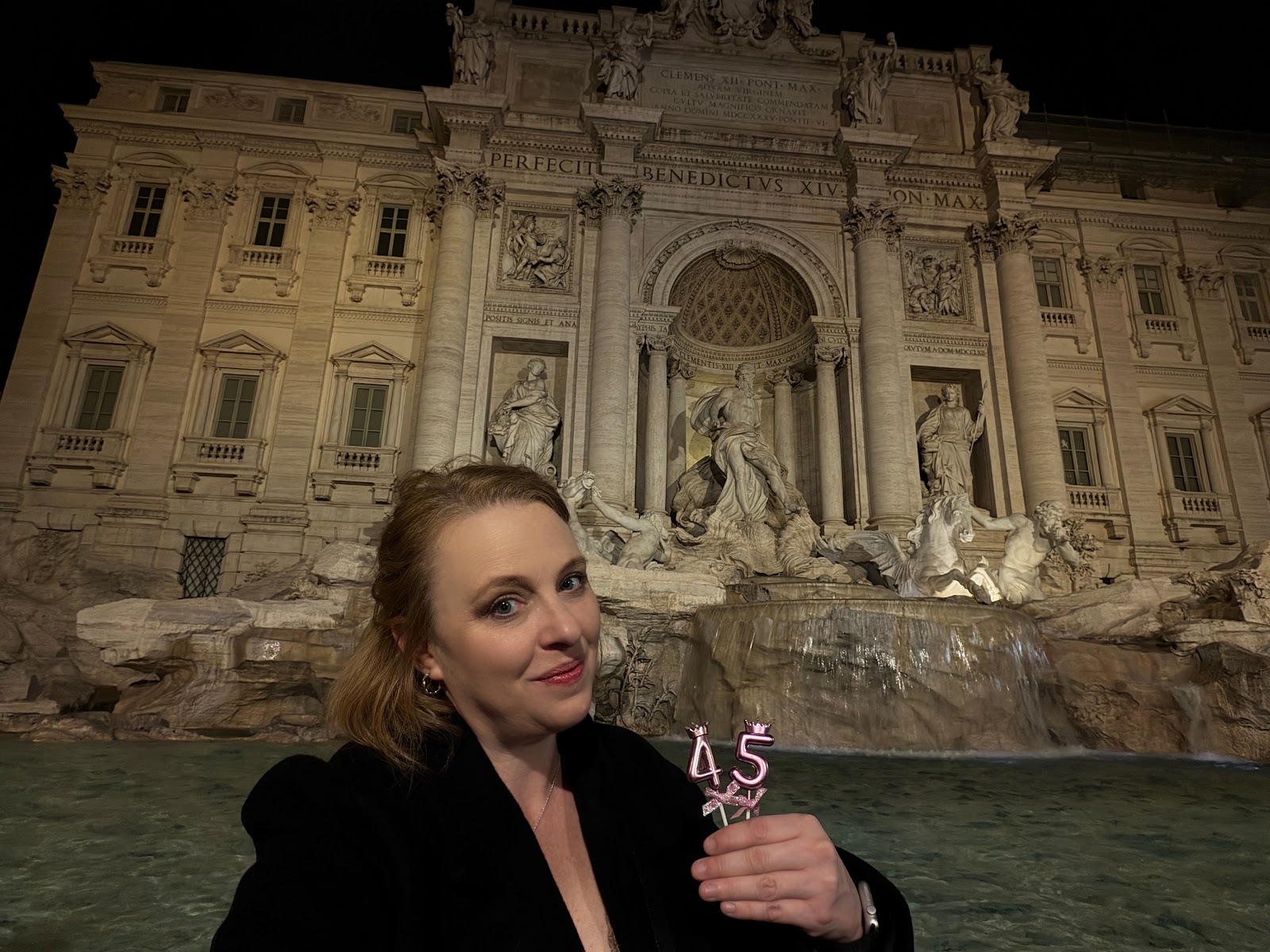
In November 2025, I celebrated my 45th birthday in Rome with my best friend. We’d discovered a speakeasy on social media and decided to find it, which seemed like a perfectly reasonable way to spend a birthday in one of the most fascinating cities in the world. There were drinks, laughter and, somewhere along the way, a tattoo that would eventually become the philosophy behind an entirely different chapter of my life.
There was just one rather significant detail about this birthday adventure: I was supposed to go back to work. I’d arranged three months of annual vacation leave from my position as a CEO, and the plan was to enjoy some time away, explore the world and eventually return to the career I’d spent years building. I hadn’t originally set out to change my life permanently, and I certainly didn’t have every practical detail of an alternative lifestyle figured out.
But by the time my 45th birthday arrived, I’d been questioning my future for months. Somewhere between the professional accomplishments I’d worked so hard for and the freedom I was beginning to experience away from them, I realized I might want something entirely different from the years ahead. Rome wasn’t where those questions began, but it was where I finally gave myself permission to take the answers seriously.
In September 2025, I was approaching the completion of one of the most significant projects of my executive career. I’d spent years working toward the creation of a safe place in my community for people escaping abuse, and the project represented something I believed in deeply. It was meaningful work, with the potential to make an enormous difference in people’s lives, and I was incredibly proud of what we’d accomplished.
Professionally, I felt I’d reached the pinnacle of my career. I’d raised three children, earned my degrees, worked through increasingly demanding roles and eventually become a CEO. I’d built a life that looked remarkably similar to the version of success I’d been taught to pursue, and I’d accomplished things that mattered to me both personally and professionally.
I was also working seventeen-hour days, six days a week, and the demands of my career had become such a significant part of my life that there wasn’t much room for anything else. My children were grown and beginning lives and families of their own. I was divorced, and maintaining much of a personal life alongside the demands of my work had become increasingly difficult.
I had become exceptionally good at being responsible, solving problems and making things happen. I could manage complicated projects, lead organizations and navigate situations that required an enormous amount of time and energy. What I hadn’t been particularly good at was asking myself whether I still wanted the life those accomplishments had created.
It wasn’t that I regretted my career or the family I’d raised. I remain enormously proud of both. The difficulty was recognizing that I could be grateful for everything I’d achieved while also feeling that something was missing. I’d spent decades working toward a particular version of success, but I was beginning to wonder whether I’d ever really stopped to consider what success meant to me personally.
I’d grown up with a fairly traditional understanding of what adulthood was supposed to look like. You got an education, found a good career, got married, raised children, bought a nice home and worked hard to build a respectable, successful life. If you followed the instructions carefully enough, the assumption was that satisfaction would eventually follow.
For a long time, I accepted that version of life without questioning it very much. I carried those expectations into adulthood, made the decisions I thought responsible people were supposed to make and spent years working toward goals that had seemed entirely reasonable when I was younger. It wasn’t until I approached my mid-forties that I began to wonder whether I’d ever really considered the alternatives.
What would my life look like if I stopped measuring my days primarily through professional accomplishments and responsibilities? What interests might I discover if I had more time to explore them? And who was I outside the roles I’d spent so many years fulfilling?
Those questions brought a complicated mixture of emotions, including pride, resentment, relief and a considerable amount of uncertainty. I was proud of the life I’d created, but I also resented some of the expectations I’d inherited and the years I’d spent accepting them without much examination. I didn’t believe my grandparents or anyone else had deliberately tried to limit my choices, but I was beginning to recognize how deeply their ideas about success had shaped my own.
I’ve explored those feelings more deeply in another article about what happens when the life you’ve spent years building no longer feels like the one you want. It’s a complicated experience because recognizing that you want something different doesn’t automatically mean you stop appreciating everything that came before it.
Related read: What Happens When the Life You Worked For Isn’t the Life You Want Anymore →
By September 2025, I was beginning to understand that distinction. What I didn’t yet know was what I intended to do about it, or how much my perspective would change once I had an opportunity to step outside my familiar routines.
My original plan was quite sensible. I would take three months of annual leave, travel, enjoy some freedom from the demands of my career and eventually return to work with a fresh perspective. I wasn’t initially planning an indefinite adventure or trying to establish an entirely new way of supporting myself.
I’d always loved travelling, particularly the cultural side of it. Give me a beautiful historic city with interesting architecture, winding neighbourhoods and somewhere lovely to stop for coffee, and I’m perfectly happy. I enjoy discovering how people live, the traditions that shape their communities and the little details that distinguish one place from another.
There’s something fascinating about arriving somewhere unfamiliar and paying attention to ordinary life. The sounds of different languages, the food being prepared in local restaurants, the conversations happening around you and the way people move through their daily routines all contribute to a destination’s personality. Those are the things I tend to remember long after I’ve forgotten the precise details of a famous attraction.
For years, however, travelling had always happened within the boundaries of a life that required me to return home. There would be a departure date, an itinerary and eventually a flight back to the responsibilities waiting for me. No matter how wonderful the experience, it was always temporary, and I was usually thinking about how much time I had left before returning to work.
Three months offered something different. I could spend more time exploring, stay longer somewhere I enjoyed and experience the world without constantly counting down the days until I needed to be back at work. For someone who had become accustomed to organizing almost every hour around responsibilities, that freedom felt unfamiliar in the most wonderful way.
I hadn’t fully appreciated how much I would enjoy having that flexibility or how difficult it might become to imagine giving it up. As the weeks passed, I began recognizing how much of my previous life had been organized around what needed to be accomplished next, even when I wasn’t physically at work.
Travelling gave me room to think about something else. I could spend an afternoon wandering through a neighbourhood simply because I was curious about it, meet people whose lives were completely different from my own or change my plans because I’d discovered somewhere I wanted to explore.
It was a surprisingly unfamiliar kind of freedom for someone who’d spent so much of her adult life looking after other people and managing responsibilities. The more I experienced it, the more difficult it became to imagine returning to exactly the same life.
I’ve always been drawn to cities that wear their history openly, and Rome does that rather spectacularly. There’s something extraordinary about wandering through streets where centuries of human history are visible in the buildings, public spaces and architectural details surrounding you.
What I love most is that the city’s history isn’t confined to museums or carefully preserved monuments. It’s part of the everyday environment, and you can be walking through an ordinary neighbourhood when you suddenly find yourself surrounded by reminders of people who lived, worked, celebrated and made decisions there hundreds or even thousands of years before you arrived.
During my birthday visit, I found myself thinking about history in a much more personal way. I had my own collection of experiences, relationships and decisions that had shaped the person I’d become. My childhood, marriage, motherhood, education and career had all contributed to my understanding of who I was and what I believed my life should look like.
But I was beginning to see that my past didn’t necessarily have to determine everything about my future. I’d already lived an enormous amount of life by the time I turned 45, but I also had years ahead of me. Why was I behaving as though the decisions I’d made at twenty or thirty should determine what I wanted to do with the rest of my life?
Rome, with its layers of history and evidence of lives lived so differently across the centuries, seemed like a particularly fitting place to consider that question.

One of the things I enjoy most about cities like Rome is allowing enough time to explore without constantly rushing between attractions. I like being able to wander through interesting neighbourhoods, stop for coffee and appreciate the details that make a city feel alive. If you’re planning your own visit, choosing accommodation in a convenient location can make that kind of exploration considerably easier, particularly if you want to spend much of your time walking.
For anyone who loves history and architecture, Rome also offers opportunities to explore its extraordinary past with knowledgeable guides. I particularly enjoy cultural experiences that help me understand not just what I’m looking at, but the people, traditions and events that shaped a destination. A well-chosen historical walking tour can add an entirely different dimension to visiting a city with so many stories.
Of course, on my 45th birthday, sightseeing wasn’t the only thing on the agenda. My best friend was with me, and we’d discovered a speakeasy on social media that we decided we absolutely had to find. I’d also been considering getting a tattoo to commemorate my travels and the changes I was beginning to contemplate, although I hadn’t necessarily decided exactly what I wanted it to represent.
So we went looking for the speakeasy, enjoyed a few drinks and had the sort of birthday experience that becomes considerably more memorable than anything you might have carefully planned in advance. Somewhere along the way, my tattoo idea became a reality, and what had originally been intended as a little souvenir of three months of adventure began to take on a much bigger meaning.
The design included an airplane and a wine glass, along with five words that seemed to capture exactly what I was beginning to understand about this new chapter of my life: Get Lost to Find More!
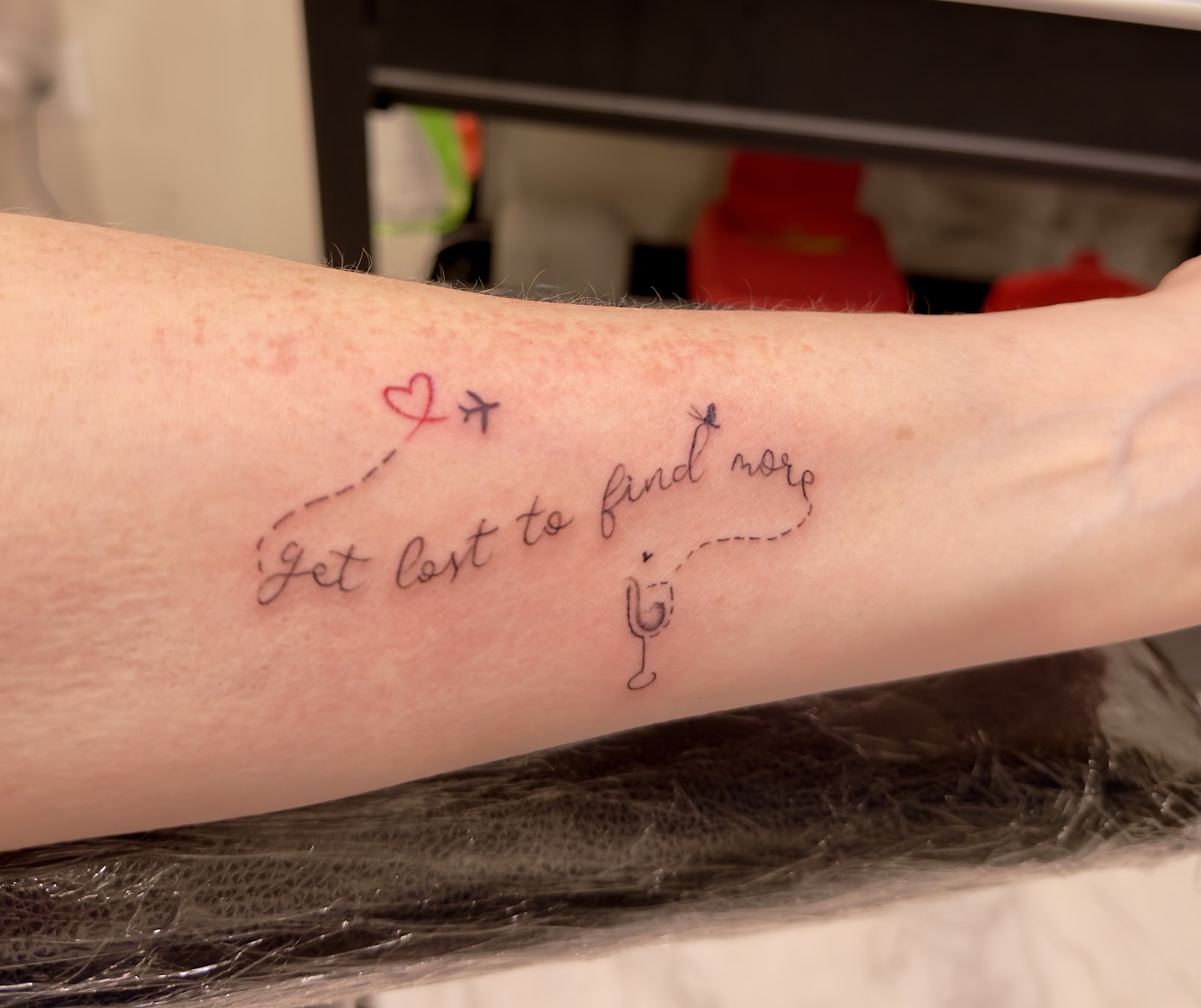
Originally, I wanted something to commemorate my travels and the experience of stepping away from my familiar routines. But those five words gradually came to represent something much more personal, particularly as I began considering what I wanted the next part of my life to look like.
For most of my life, I’d followed a fairly recognizable roadmap. There had always been another responsibility to fulfil, another goal to achieve or another expectation to meet. I knew what was supposed to happen next because I’d spent decades following a version of life that had largely been defined long before I began questioning it.
What would happen if I stopped following that roadmap? What might I discover about myself if I allowed room for experiences I hadn’t previously considered, or if I stopped treating professional achievement as the primary measure of whether I was living successfully?
I wasn’t interested in pretending the past forty-five years hadn’t happened. I was proud of the woman I’d become and everything she’d managed to accomplish, but I was beginning to recognize that there were other parts of myself I’d never really given much opportunity to explore.
The tattoo became a reminder of that possibility. It represented the freedom to wander beyond the familiar, experience something unexpected and discover more about the world and myself in the process.
Around that birthday, I made the decision that I didn’t want to return to my previous career when my annual leave ended. I hadn’t originally planned to make that choice, and I certainly hadn’t solved every question about what came next, but for the first time, I was willing to imagine a future that looked significantly different from the one I’d spent decades creating.
Making the decision not to return to my previous career was only part of the change I was contemplating. The more complicated adjustment involved reconsidering an identity I’d spent much of my adult life building.
For years, I’d been a mother, a wife, a professional and eventually a CEO. I’d been responsible for people, organizations, decisions and outcomes, and those roles had given my life structure and purpose. I understood how to operate within them and had spent years developing the knowledge, abilities and confidence required to manage the responsibilities that came with them.
Travelling full-time meant stepping away from much of what had become familiar. My children were grown and building their own lives, and I was learning how to make decisions based more directly on what interested me rather than what everyone else needed.
That was a significant adjustment because I’d spent so many years being responsible for other people that considering my own happiness and freedom sometimes felt uncomfortable. There was a part of me that still associated being productive, useful and needed with doing something worthwhile, and I had to reconsider what purpose might look like when it wasn’t connected to professional accomplishment or the daily responsibilities of raising children.
There were practical questions, too. I was leaving a successful career with an established income and a degree of security that I understood. Travelling indefinitely would require careful financial decisions, and I didn’t have an entirely developed plan for generating sustainable income while living on the road.
I still don’t have every aspect of that worked out, and I think it’s important to acknowledge that. Making a significant life change doesn’t automatically remove uncertainty, and sometimes it introduces an entirely new collection of responsibilities and questions that you have to learn how to manage.
But I also began understanding that I wasn’t starting from nothing. My education, professional experience, years of leadership and the challenges I’d navigated while raising my family were still part of who I was. Those things didn’t disappear simply because I was no longer following the same career path.
I was still capable of managing complicated situations, making decisions and learning new things. I was simply beginning to use those abilities in an entirely different context, and that realization helped me see the decision less as abandoning the woman I’d spent decades becoming and more as allowing her to explore something she hadn’t previously had the time or opportunity to pursue.

One of the unexpected outcomes of travelling full-time has been discovering how capable I am outside the professional environment where I’d spent years proving myself.
Leading an organization requires confidence, problem-solving abilities and a willingness to make decisions under pressure. I knew I possessed those qualities in my career, but navigating unfamiliar countries independently introduced an entirely different collection of challenges.
Over the past year, I’ve travelled through almost thirty countries and encountered situations involving twelve different languages. I’ve had to understand unfamiliar transportation systems, communicate across language barriers, adapt to different customs and find my way through places that were completely unknown to me.
Some destinations frightened me before I arrived, particularly places such as Egypt and Rio de Janeiro, where the warnings I’d heard had shaped my expectations. I approached those experiences with more preparation, paid attention to safety considerations and occasionally chose guided activities or the company of other travellers when I felt more comfortable doing so.
What surprised me wasn’t that every destination turned out to be easy or that I suddenly stopped feeling nervous. It was realizing that I could manage unfamiliar situations, make sensible decisions and learn from experiences that might once have seemed beyond my comfort level.
I’ve written more about that process, including what I learned from confronting some of my travel fears, in another article about developing solo travel confidence. It’s a subject I care about because I think many people assume they need to feel completely confident before trying something unfamiliar, when so much of that confidence actually develops through experience.
Related read: Going Solo Before You Feel Ready: What I Learned About Waiting for Confidence →
I’ve also discovered how much I enjoy meeting people and how different friendships can become when you’re travelling independently. I’ve shared adventures with people I’d only recently met, developed connections that have continued across countries and learned that travelling alone doesn’t mean you have to spend every moment without company.
Some of those relationships have even influenced the direction of my writing, which is something I certainly couldn’t have predicted when I first stepped away from my career. I’ve met people whose stories have challenged my assumptions, introduced me to different perspectives and become part of experiences that have stayed with me long after we continued in different directions.
But perhaps the biggest change has been learning to enjoy my own company. I can spend an afternoon exploring independently, sit down to dinner alone or choose to do absolutely nothing tourist-related without feeling that the experience is incomplete.
That doesn’t mean I never experience loneliness or homesickness. There are moments when I miss my family, the familiarity of home and the predictability of my previous life, but those feelings can exist alongside genuine happiness and excitement about the life I’m creating.
I’ve written about the everyday reality of this lifestyle, including the constant packing, practical responsibilities, friendships, occasional fatigue and the uncertainty that comes with living without a permanent home.
Those difficulties haven’t made me regret my decision. They’ve simply given me a more realistic understanding of what it means to live differently, and they’ve taught me that appreciating a new chapter doesn’t require pretending every part of it is easy.
One of the most unexpected discoveries of this chapter has been how much I enjoy writing about it.
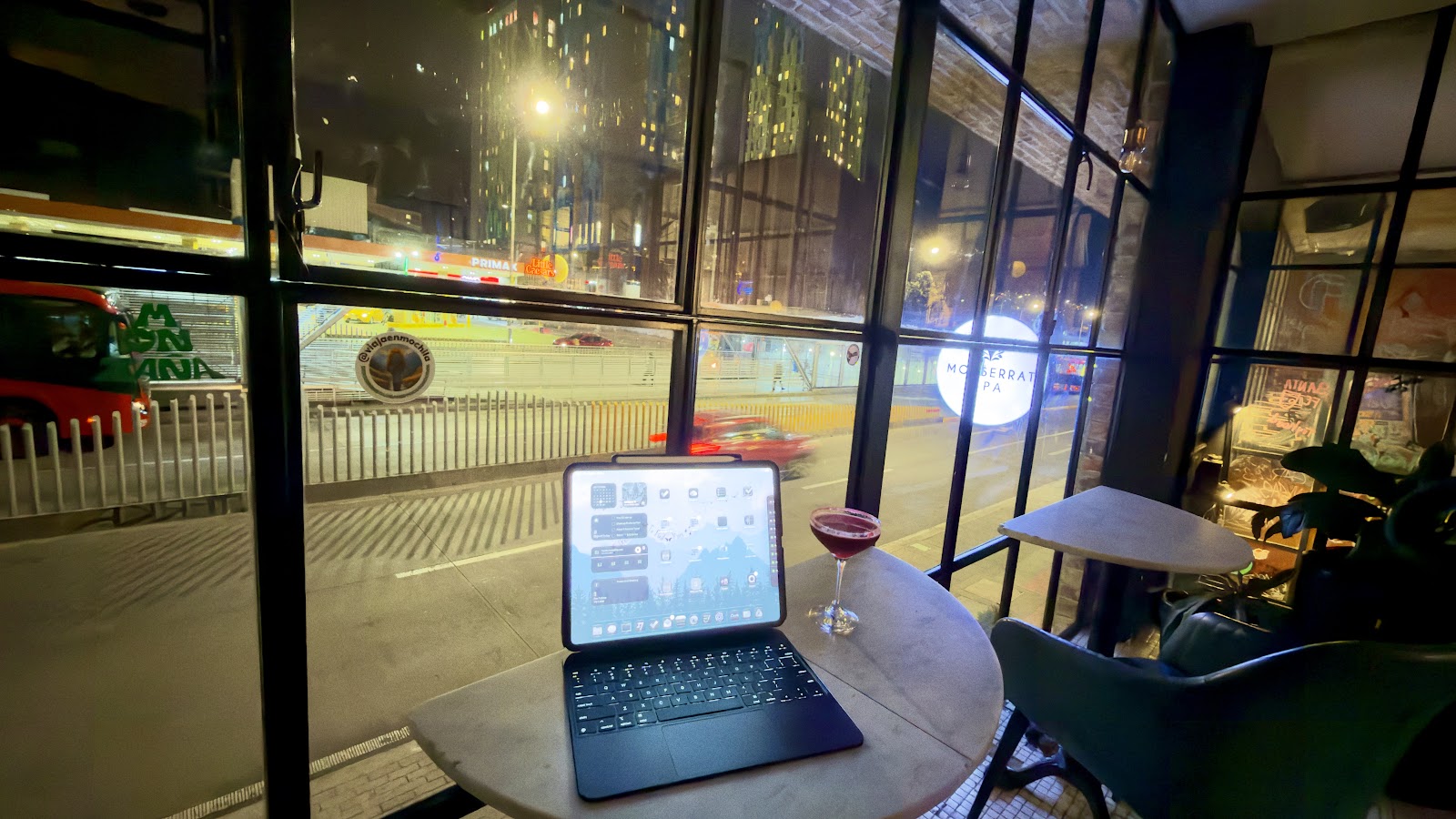
I originally began documenting my travels because I wanted to remember the places I visited, the people I met and the experiences I was having. I wanted something more meaningful than a collection of photographs with location names attached to them, and I found myself increasingly interested in capturing the atmosphere of a place and the stories that developed around ordinary experiences.
I’ve always loved observing the details that make a destination feel alive. The atmosphere of a local market, the sound of a language I don’t understand, music drifting through a neighbourhood or the smell of food being prepared in a restaurant kitchen can tell me as much about a place as its major attractions.
I wanted to capture those experiences in words so that somebody reading about them might understand a little of what it felt like to be there. I also wanted to preserve the less glamorous parts of travelling because confusing transportation arrangements, disappointing accommodation, unexpected conversations and occasional questionable decisions are all part of the experience.
When I began writing more regularly, I discovered that I genuinely enjoyed the process of reflecting on what I’d seen and finding the words to describe it. Writing gave me an opportunity to revisit experiences and understand why certain places, encounters or conversations had stayed with me.
I also found that people connected with different parts of my story. Some were interested in the destinations and practical travel recommendations, while others were more curious about why I’d left a successful career and how I was adjusting to such a significant change in midlife.
I began recognizing how many people were asking themselves similar questions about their own lives. They might not want to travel full-time, but they were reconsidering careers, relationships, responsibilities or the expectations they’d spent years trying to fulfil.
My circumstances were different from theirs, but the underlying questions were often familiar. What happens when the life you’ve worked toward no longer feels like the one you want? How do you make a significant change after spending decades establishing yourself? And how do you find the confidence to try something new when the familiar alternative offers so much more certainty?
I didn’t set out to become a travel writer when I arranged those three months of annual leave. But the more I documented my experiences, the more I realized that writing could become an important part of what I wanted to do next.
That’s how Mia Without Borders began taking shape.
Today, Mia Without Borders is becoming a place where I can bring together my love of travel, photography, culture, storytelling and the rather complicated experience of starting a new chapter in my forties.
I want to share practical information about destinations, accommodation, transportation, activities and the things that might help somebody make better decisions about their own travels. But I also want to share the personal side of experiencing the world independently, particularly as a woman who raised a family, built a career and then decided she was interested in exploring something different.
I’m fascinated by the way people live and by the experiences that challenge my understanding of the world. I’ve discovered how much I enjoy conversations with people from different cultures, learning about their lives and recognizing how many similarities exist beneath our different backgrounds and perspectives.
And I’ve learned that being comfortable travelling alone doesn’t mean being uninterested in companionship. Some of my favourite experiences have come from unexpected friendships and shared adventures, while others have involved the freedom to spend time entirely by myself.
Some of those friendships have had an influence on my life that goes well beyond the time we spent together travelling. I’ve met people who have shaped my perspective, encouraged my writing and become part of a journey that has taken on a much greater meaning than the temporary adventure I’d originally planned.
I’ve written about those encounters, including some of the friendships that developed through hostels, shared activities and unexpected conversations, in my article about meeting people while travelling independently.
Related read: How I Meet People While Travelling Solo →
I hope the stories I share give readers a sense of what it’s actually like to experience the places I’m visiting, rather than simply providing another list of attractions or hotels. The practical information matters, but so do the conversations, cultural differences, emotions and everyday experiences that make travelling meaningful.
I also hope my journey encourages people to question the assumption that adventure, personal discovery and significant life changes belong exclusively to younger people. I was 45 when I decided not to return to the career I’d spent years building, and I was already a mother with three grown children, an accomplished professional and a woman who had experienced a great deal of life.
None of those things meant my curiosity about the world had disappeared or that I was finished discovering new interests. If anything, they gave me a different perspective from which to experience everything that came next.
When I think back to my 45th birthday in Rome, I remember a woman who had worked incredibly hard to get where she was and was finally beginning to question where she wanted to go next.
I was proud of my career, my family and the work I’d accomplished, and I still am. But I was beginning to understand that the things I’d wanted from life had changed, and that there was no particular reason I needed to spend the years ahead pursuing exactly the same goals.
After decades of professional responsibility, what I wanted most was time. I wanted the opportunity to explore, experience different cultures, meet interesting people and pursue interests that made me genuinely happy. I wanted to discover what life might look like if I stopped organizing so much of it around the expectations I’d accepted without questioning.
Rome gave me a chance to think about that possibility differently, and my birthday became the moment when I was finally willing to make a decision about it. I didn’t need to discard my past to choose a new direction because everything I’d learned and experienced could come with me, including the skills I’d developed through my career and the years I’d spent raising my children.
The woman who worked those seventeen-hour days, managed extraordinary professional responsibilities and raised a family is the same woman who now travels the world with a suitcase, a camera and an ever-growing collection of stories. I’m simply spending my days rather differently, and I’m still learning what I want that to look like.
There are moments when I miss the stability of my previous life, particularly the certainty of knowing where I’d be living and what my professional future looked like. Building a different kind of income while travelling comes with its own worries, and I haven’t discovered a magical way to eliminate every practical challenge.
But I’ve also experienced things I might never have imagined, developed friendships I couldn’t have planned and discovered a genuine passion for writing that has opened another collection of possibilities.
What was supposed to be three months of annual leave became the beginning of something much larger. I didn’t originally know where the journey would lead, and I still can’t tell you exactly what the next several years will look like.
There are places I haven’t visited, people I haven’t met and stories I haven’t begun to imagine. For somebody who spent much of her adult life following a fairly predictable roadmap, that uncertainty can occasionally be uncomfortable, but it’s also part of what makes this chapter so interesting.
I used to think getting lost meant I’d somehow failed to follow the directions. These days, I’m beginning to appreciate that wandering beyond the familiar can introduce you to things you never would have discovered otherwise, even when the experience involves a little uncertainty or an unexpected change of plans.
That was the idea behind the tattoo I got in Rome, although I don’t think I fully appreciated just how much those words would come to mean to me. What began as a birthday souvenir has become a reminder that I can appreciate everything I’ve accomplished without allowing my past to determine every choice I make in the future.
Get Lost to Find More!
Affiliate disclosure: This article contains affiliate links. If you book through them, I may earn a small commission at no additional cost to you.

2 Responses