
I arrived in Egypt with a head full of history, a healthy dose of nerves and plenty of expectations shaped by what I’d heard about the country. What I found was a destination that could feel overwhelming and extraordinary, sometimes within the same day. From going inside the Great Pyramid and riding a camel at Giza to exploring ancient churches, mosques and bustling bazaars, here’s what I’d recommend for your first visit to Cairo.
Before visiting Egypt, I was genuinely nervous. I’d heard the stories, read the warnings and listened to plenty of opinions about what it might be like to travel there as a woman. Some people spoke about Egypt with extraordinary enthusiasm, while others made it sound like somewhere I should reconsider visiting altogether.
As someone who loves history, architecture and learning about different cultures, I couldn’t imagine passing up the opportunity to experience Egypt for myself. The pyramids alone had fascinated me for years, but I was equally interested in discovering what existed beyond those famous images. I wanted to explore historic neighbourhoods, understand the country’s religious heritage, experience the markets and learn about the people whose everyday lives unfold alongside some of the world’s most extraordinary ancient monuments.
What I hadn’t fully appreciated before arriving was how many different versions of Cairo exist alongside one another. There’s the ancient world of pharaohs, pyramids and archaeological discoveries, but there’s also a modern city filled with traffic, markets, apartment buildings, restaurants, families and people going about their ordinary lives. There’s Islamic Cairo, Coptic Cairo and the unmistakable energy of a metropolitan area that doesn’t necessarily slow down simply because you’ve arrived with a sightseeing itinerary.
I visited Egypt as part of an organized ten-day journey with Timeless Tours, booked through TourRadar. The itinerary began in Cairo with the pyramids and continued through some of Egypt’s most famous historical destinations, including a Nile cruise and time along the Red Sea.
The guided format gave the journey a structure I appreciated, particularly because I’d been nervous about visiting Egypt in the first place. I wanted to experience the country’s history and culture without having to organize every transportation arrangement or navigate every unfamiliar situation entirely by myself.
And it turned out that some of my most memorable experiences involved things I never could have fully understood from photographs: standing beside the pyramids and appreciating their enormous scale, actually going inside one, exploring places connected to thousands of years of religious history and meeting people along the way who became part of my travel story.
I wouldn’t describe my time in Egypt as an experience where I suddenly felt completely safe and relaxed everywhere I went. That wouldn’t be accurate. There were situations and environments that made me uncomfortable, and I remained conscious of my surroundings.
But there were also extraordinary moments, generous people and fascinating places that challenged some of the assumptions I’d brought with me. I came away appreciating Egypt’s complexity rather than feeling that it needed to fit neatly into either a frightening warning or a romantic travel story.
For first-time visitors, I think the best way to approach Cairo is with curiosity, realistic expectations and a little more preparation than you might need in an easier-to-navigate destination.
Cairo is Egypt’s capital and one of the largest metropolitan areas in Africa and the Middle East. It’s a major centre of history, religion, commerce and culture, and it’s often the starting point for travellers planning to explore more of the country.
The famous Pyramids of Giza are located in neighbouring Giza, within the wider Cairo metropolitan area. Other important attractions are spread across different parts of the city, including Coptic Cairo, the historic Islamic district and museums housing extraordinary collections of Egyptian antiquities.
For a first visit, these are the essentials I’d keep in mind:
I’d also encourage you to remember that Cairo is a working city, not an attraction designed exclusively for visitors. The traffic, crowds, noise and constant movement are part of the environment you’ll be navigating.
Some people love that energy immediately, while others find it exhausting. I think you can appreciate the city’s history and culture while acknowledging that the experience can be overwhelming, particularly when it’s your first visit.
Tour I booked: Best of Egypt – 5 Star Cruise by Timeless Tours (10-Day Guided Egypt Tour) →
Cairo is a destination where the weather can make a significant difference to how comfortable you feel sightseeing.
Many of the major attractions involve spending time outdoors, walking across exposed archaeological sites or exploring areas where shade and opportunities to rest may be limited. At Giza, for example, much of the attraction is spread across a large open plateau.
For a first visit, I’d favour the cooler months between October and April. Daytime temperatures are generally more manageable for exploring archaeological sites, historic neighbourhoods and markets.
Winter can bring cooler evenings, and the city may experience haze or occasional rain. I’d still pack layers rather than assuming Egypt is hot every hour of the day.
Summer can be extremely hot, especially when you’re sightseeing outdoors. I wouldn’t say you can’t enjoy Cairo during these months, but I’d organize the itinerary differently.
I would schedule major outdoor attractions early, plan regular breaks and avoid packing the hottest part of the day with long walks across exposed sites.
For first-time visitors who aren’t accustomed to desert heat, choosing a cooler season can make the experience considerably more enjoyable.
Before getting into Cairo’s individual attractions, it’s worth explaining how I organized my visit because I think the decision to take an organized tour influenced the experience in a positive way.
I booked the Best of Egypt – 5 Star Cruise, operated by Timeless Tours and listed on TourRadar. It’s a ten-day guided itinerary that begins and ends in Cairo, combining ancient monuments with time exploring the Nile Valley and the Red Sea coast.
The published itinerary includes guided visits to the Giza Pyramids, the Great Sphinx and Saqqara, followed by travel to Aswan, a Nile cruise, the temples around Luxor and time in Hurghada. The current listing also includes the Grand Egyptian Museum, although the exact inclusions and optional activities should always be checked for your departure.
That wider itinerary is important context because my Egypt experience wasn’t limited to standing in front of the pyramids. It introduced me to several very different parts of the country, and the combination of historical sites, time on the Nile, food, markets and people contributed to my understanding of Egypt.
One of the advantages of a guided tour is having somebody with local knowledge explain what you’re seeing. When you’re visiting archaeological sites that represent thousands of years of history, that context can completely change how you understand the buildings, monuments and stories associated with them.
There are practical advantages, too. Transportation, accommodation arrangements and the order of sightseeing activities can be difficult to coordinate when you’re unfamiliar with a destination, particularly if you’re combining Cairo with cities farther south.
I don’t think a guided tour is necessary for everyone. Some people enjoy organizing every part of their journey independently, and Cairo certainly offers opportunities to explore without joining a multi-day group.
But if you’re nervous about travelling in Egypt, interested in meeting other travellers or hoping to see several regions within a limited period, it’s an option I’d seriously consider.
I’ve also learned that travelling solo doesn’t mean I need to organize every experience alone. Some of my favourite travel memories have developed from shared adventures and conversations with people I never could have planned to meet.
Related read: How I Meet People While Travelling Solo →
Cairo has enough historical and cultural attractions to occupy considerably more than a few days. For a first visit, I’d prioritize the places that give you a sense of Egypt’s extraordinary history while leaving time to experience the modern city.
These are the attractions I’d begin with, including places I personally experienced and a few important additions worth considering for future visitors.
It’s difficult to imagine visiting Cairo for the first time without making the trip to Giza.
We’ve all seen photographs of the pyramids, studied them in school or watched documentaries attempting to explain how such enormous monuments were built thousands of years ago. They’re among the world’s most recognizable structures, which means it’s easy to assume you already have a fairly good idea of what to expect.
But there’s something entirely different about seeing them in person.
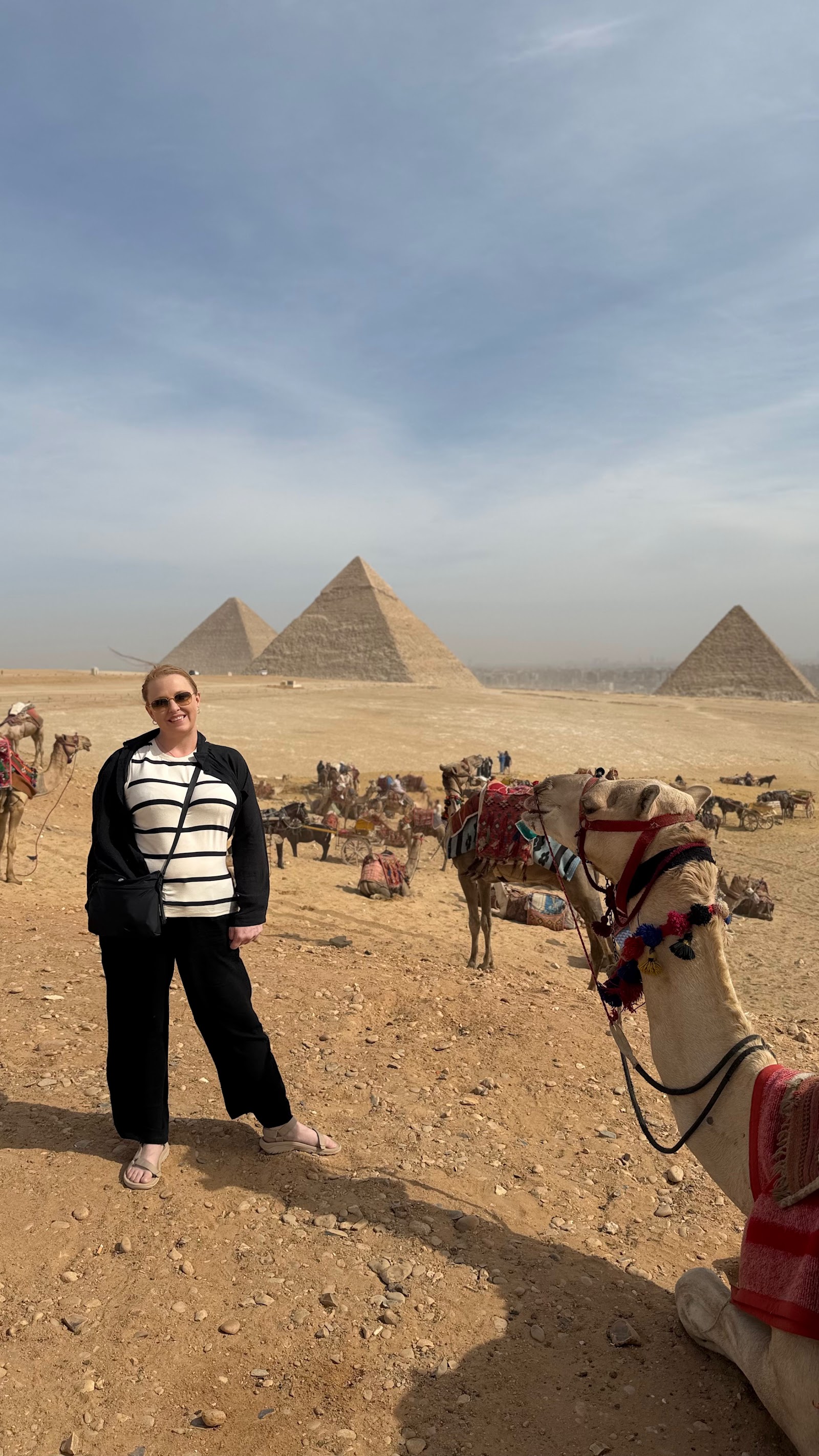
The scale is extraordinary. The Great Pyramid of Khufu, along with the pyramids of Khafre and Menkaure, dominates the Giza Plateau, and standing nearby gives you a much stronger appreciation of the engineering, organization and human effort required to construct these monuments.
I love places where history feels tangible, where you can stand somewhere and try to imagine the people whose lives unfolded there centuries or millennia before your own. Giza takes that experience to another level because the structures themselves are so monumental.
What particularly interests me is that the pyramids weren’t built as isolated tourist attractions. They were part of a much larger ancient society with beliefs, traditions, systems of government and an understanding of life and death that shaped how these monuments were constructed.
Having a knowledgeable guide explain that context can make the experience considerably more meaningful than simply arriving to take photographs.
One of the experiences I actually had was going inside the Great Pyramid.
I think it’s important to distinguish between visiting the Giza Plateau and entering one of the pyramids because they are not the same activity. You can have a wonderful experience admiring the monuments from outside, and many visitors choose to do exactly that.
Entering the Great Pyramid is a more physically demanding experience. The internal passageways can be narrow, steep and confined, with limited room to move comfortably in certain sections. There isn’t an elaborate collection of treasure waiting inside, and the interior is very different from the decorated tombs or museum galleries people sometimes imagine.
The appeal is the opportunity to enter a structure that has stood for approximately 4,500 years and experience a part of its interior firsthand.
For me, having actually gone inside is one of the distinctive experiences I can say I had during my time in Egypt. It’s something quite different from looking at the monument from the surrounding plateau.
I would encourage anyone considering it to think carefully about their mobility and comfort in enclosed spaces. If you have difficulty with steep passages, confined environments or physically demanding movement, this may not be the right experience for you.
Important ticket detail: General admission to the Giza Plateau does not automatically include entry inside the Great Pyramid. You need to check the separate interior admission ticket and current availability.
Recommended experience: Grand Egyptian Museum, Pyramids, Sphinx and Lunch →
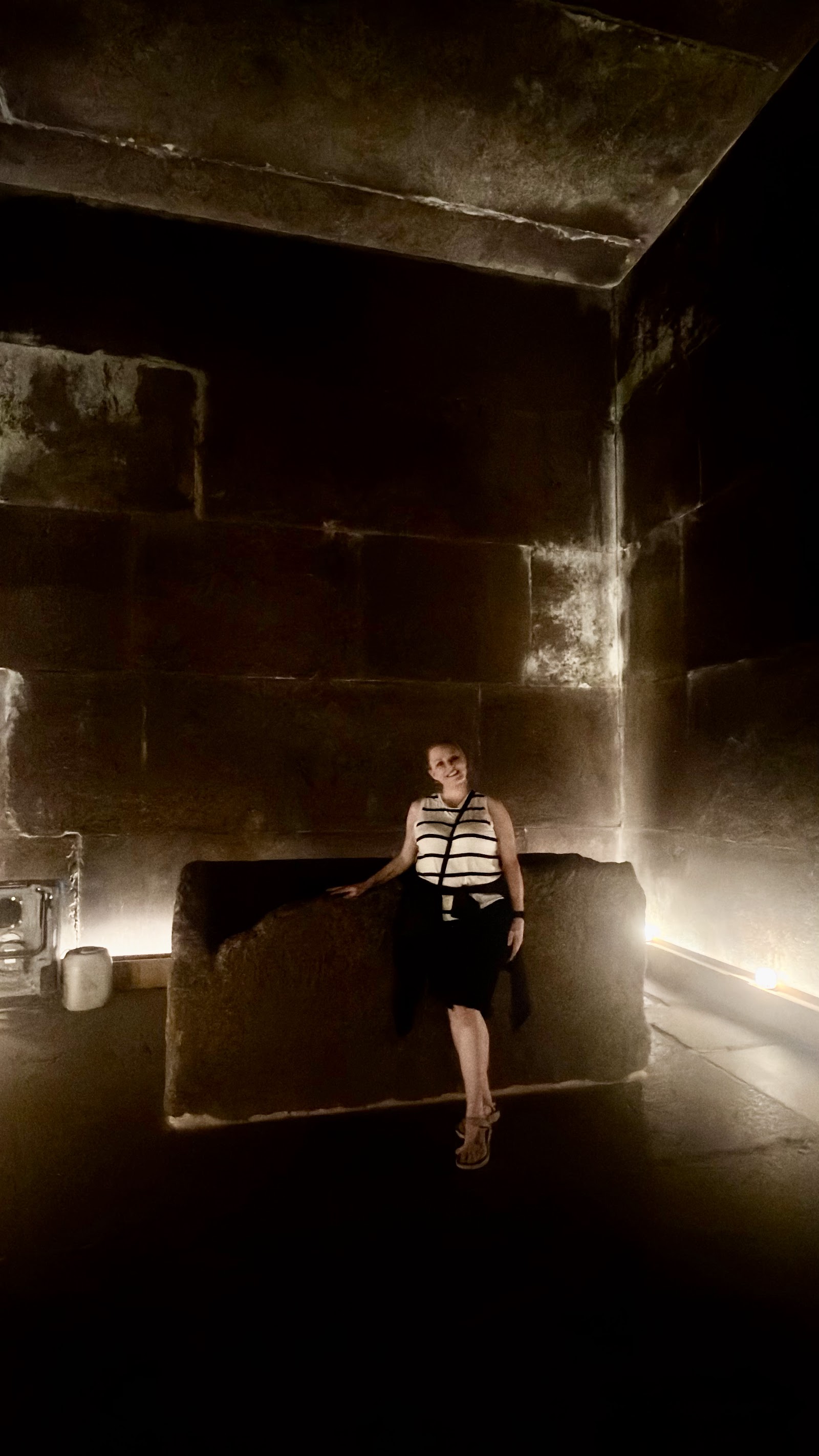
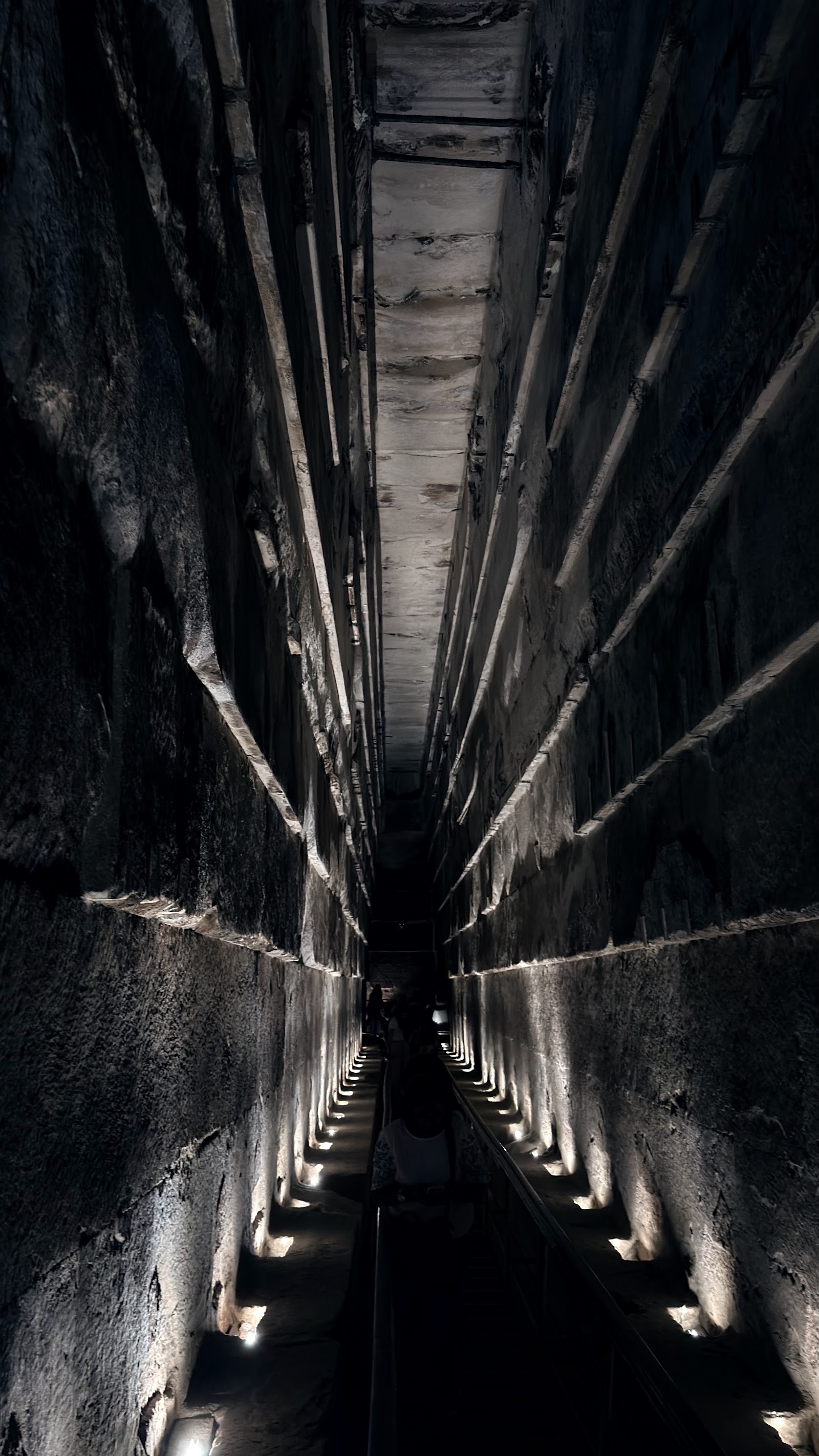
One thing I’d tell a first-time visitor is not to feel that entering the pyramid is compulsory. The exterior monuments, their historical significance and the wider plateau are extraordinary on their own.
But if you’re physically comfortable with the conditions and the experience interests you, it’s certainly a distinctive way to encounter ancient Egyptian history.
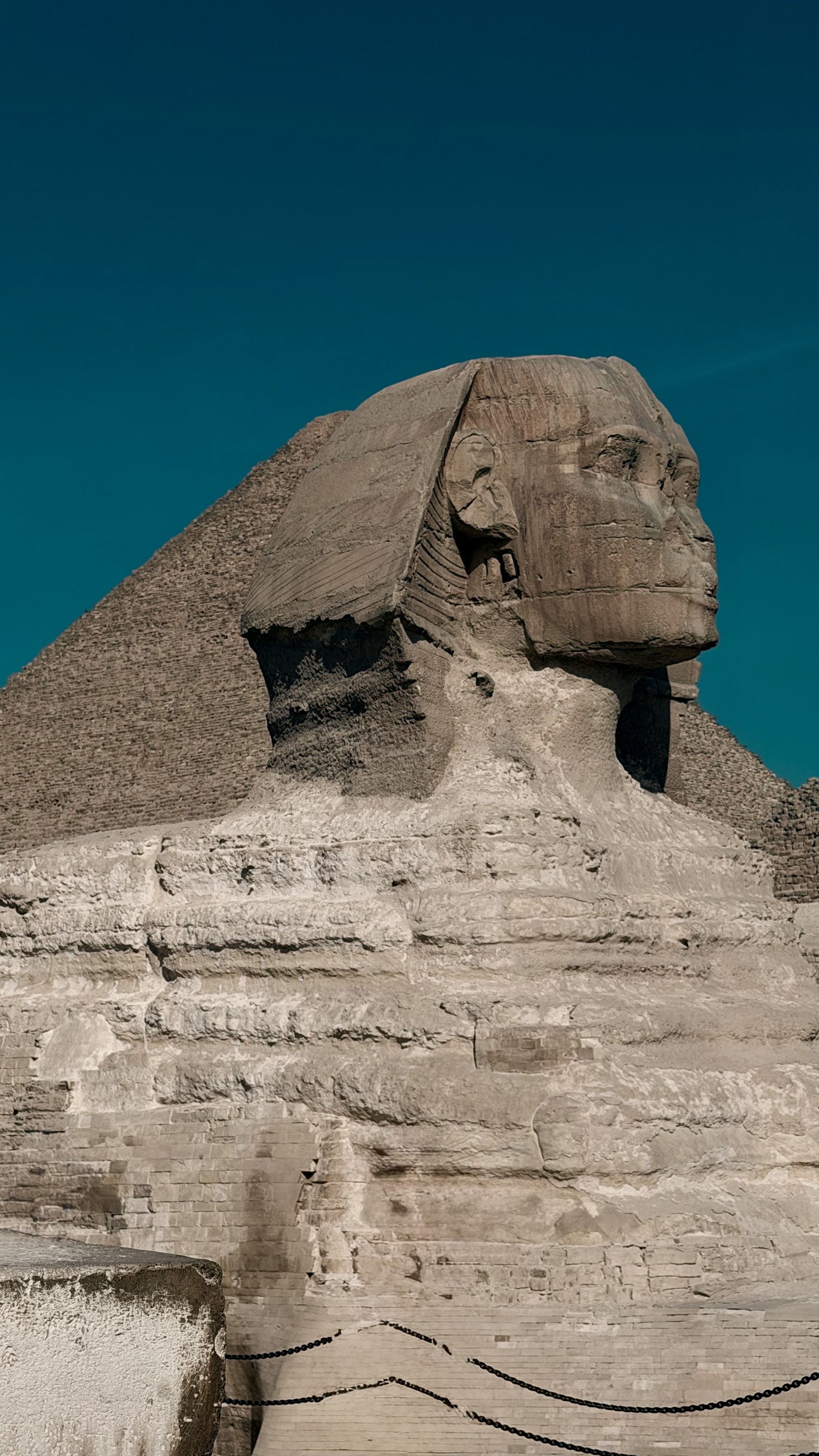
The Great Sphinx is another essential part of a visit to Giza.
Carved from limestone, with the body of a lion and the head of a human, the monument sits near the pyramids and has become one of the most recognizable symbols of ancient Egypt.
It’s particularly interesting to see the Sphinx within the wider archaeological setting rather than as a separate image. The relationship between the monuments, surrounding ruins and landscape adds context to what you’re looking at.
I would allow enough time to appreciate both the Sphinx and the pyramids rather than treating the entire area as a quick stop on the way to another attraction.
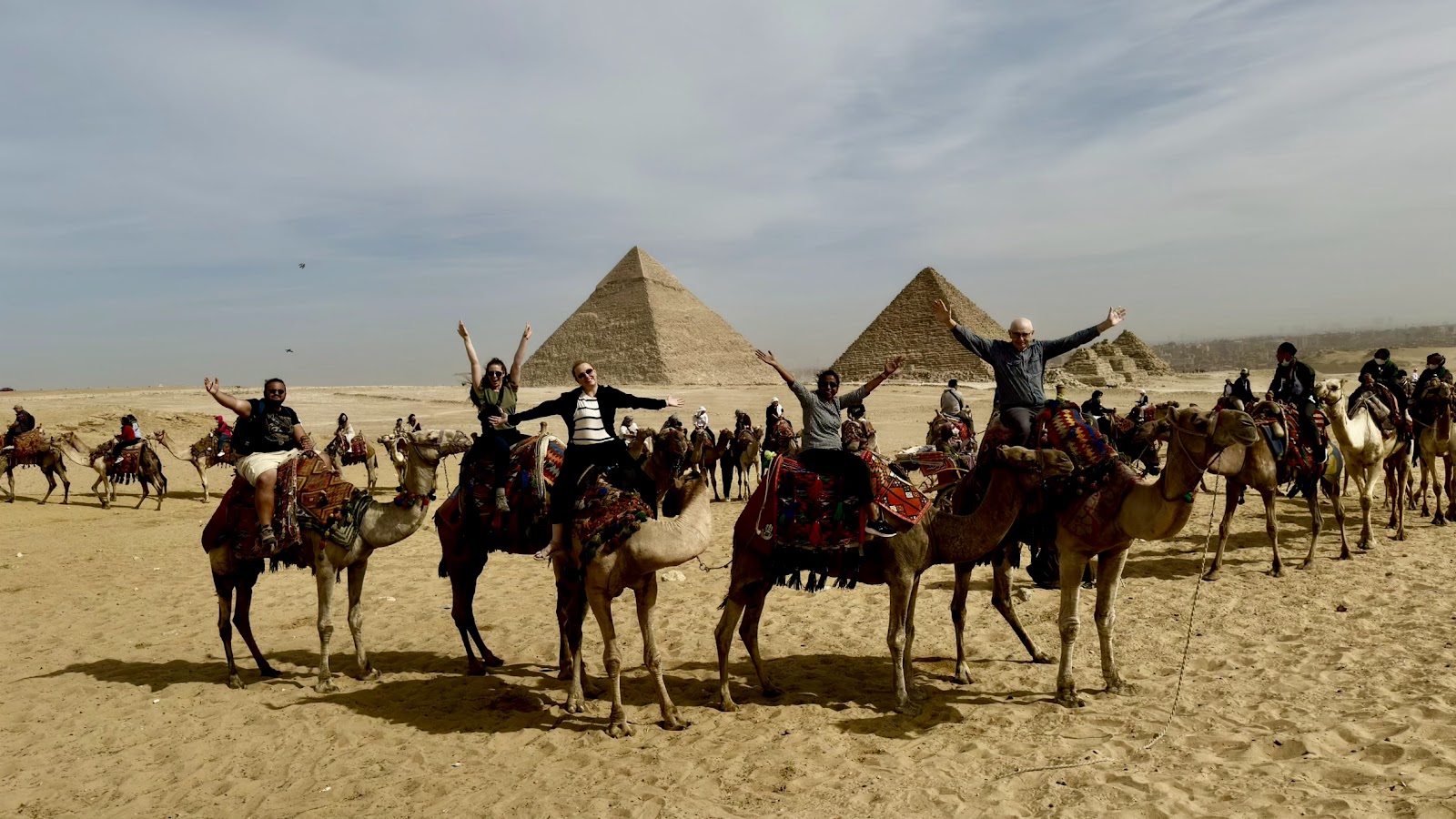
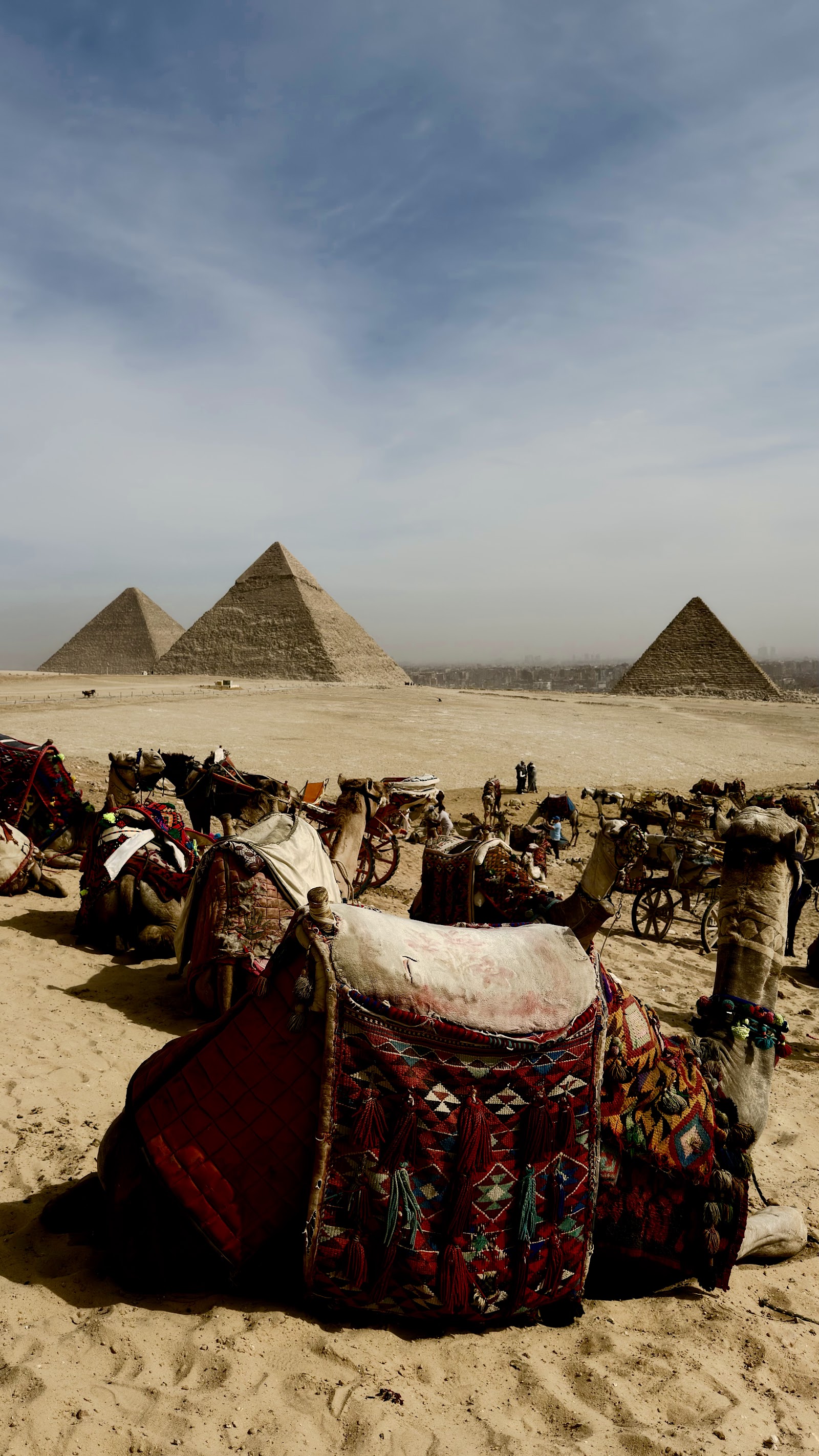
I also rode a camel during my time at Giza, which is one of those experiences associated so strongly with images of Egypt that it almost feels like part of the classic visitor experience.
The setting certainly provides the opportunity for memorable photographs, with the desert landscape and pyramids creating an extraordinary backdrop.
But it’s worth thinking carefully about animal welfare before booking any camel or horse activity. Not every operator maintains the same standards, and I wouldn’t recommend participating simply because somebody offers you a ride or promises an inexpensive photograph.
If you decide a camel ride is something you’d like to experience, research the provider, observe the animal’s condition and handling, agree on the full price and duration in advance, and be prepared to decline if something concerns you.
I’d also recommend confirming whether the ride is actually included in a booked tour or is an additional expense. Tour packages vary, and a camel ride shouldn’t be assumed to be part of your admission to the pyramids.
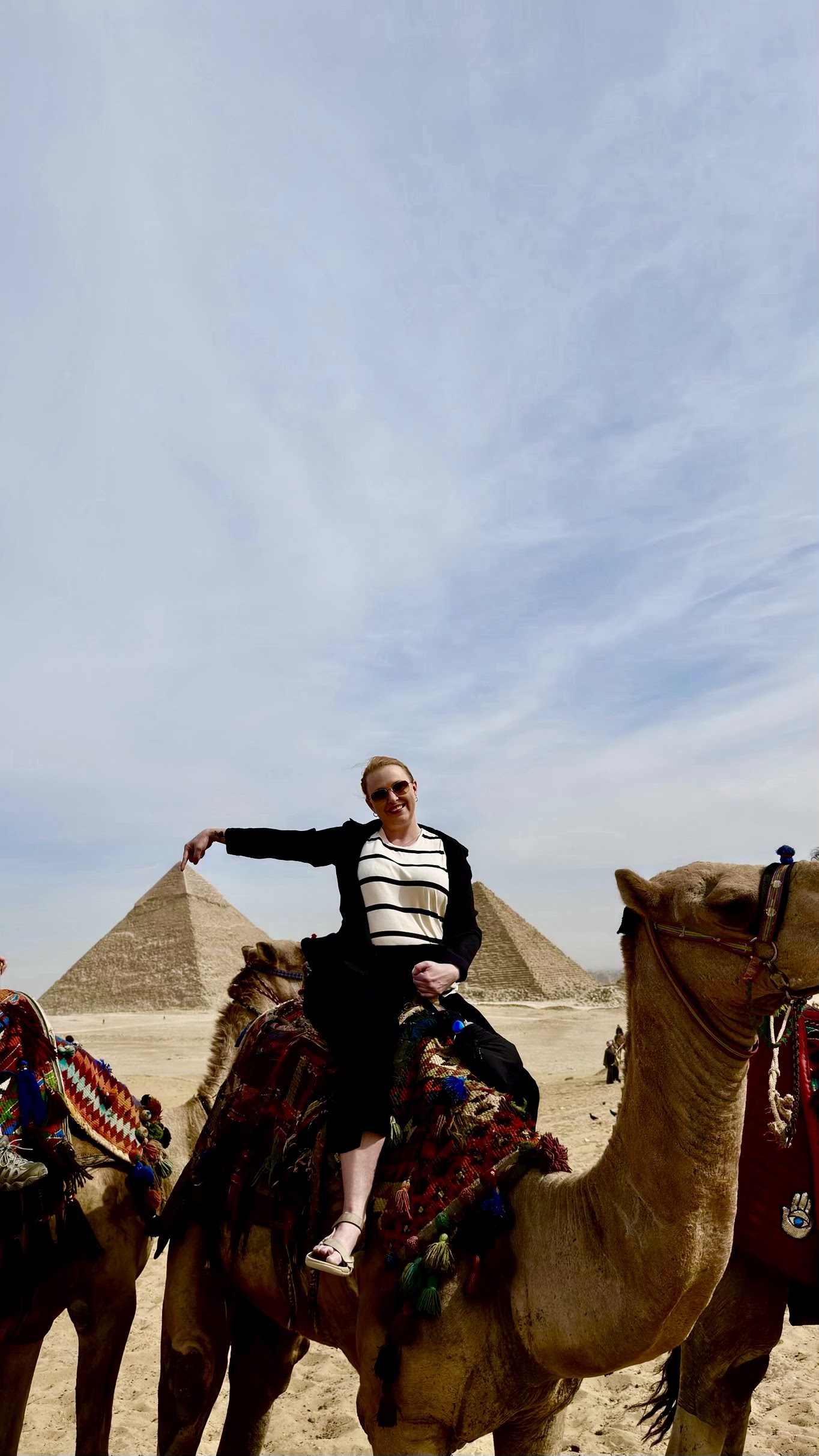
Another major stop is Saqqara, which offers a different perspective on ancient Egyptian history.
Located outside central Cairo, Saqqara is an enormous archaeological area associated with the ancient capital of Memphis. It’s particularly famous for the Step Pyramid of Djoser, an early monumental stone structure that represents an important development in pyramid construction.
What makes Saqqara so interesting is that it helps place the famous pyramids at Giza within a much longer story. The Egyptian pyramids didn’t simply appear fully developed. Their architecture evolved through different periods and approaches to royal burial.
The Step Pyramid is a particularly valuable place to learn about that evolution, and the surrounding archaeological sites contain tombs and other structures that reveal aspects of ancient Egyptian society beyond the most famous royal monuments.
For first-time visitors who are genuinely interested in history, I’d recommend including Saqqara if the itinerary and transportation arrangements allow.
It’s also a good example of why a guided experience can be worthwhile. Understanding the relationship between different archaeological sites makes the visit more rewarding than viewing each monument as an isolated attraction.
One of the most fascinating things about Cairo is the opportunity to explore historical traditions that extend far beyond the ancient pharaonic period.
I visited Coptic Cairo and explored religious landmarks associated with the city’s Christian and Jewish heritage. As someone who enjoys churches, architecture and the history of how different communities have developed, this was an important part of my Cairo experience.
Coptic Cairo is located in Old Cairo, in an area associated with a Roman fortress and several historically significant religious buildings.
There’s something fascinating about moving between places associated with different periods of history and realizing that the city has been shaped by numerous cultures, faiths and communities over centuries.
For visitors who are interested in more than the pyramids, I’d consider Coptic Cairo a particularly worthwhile part of the itinerary.
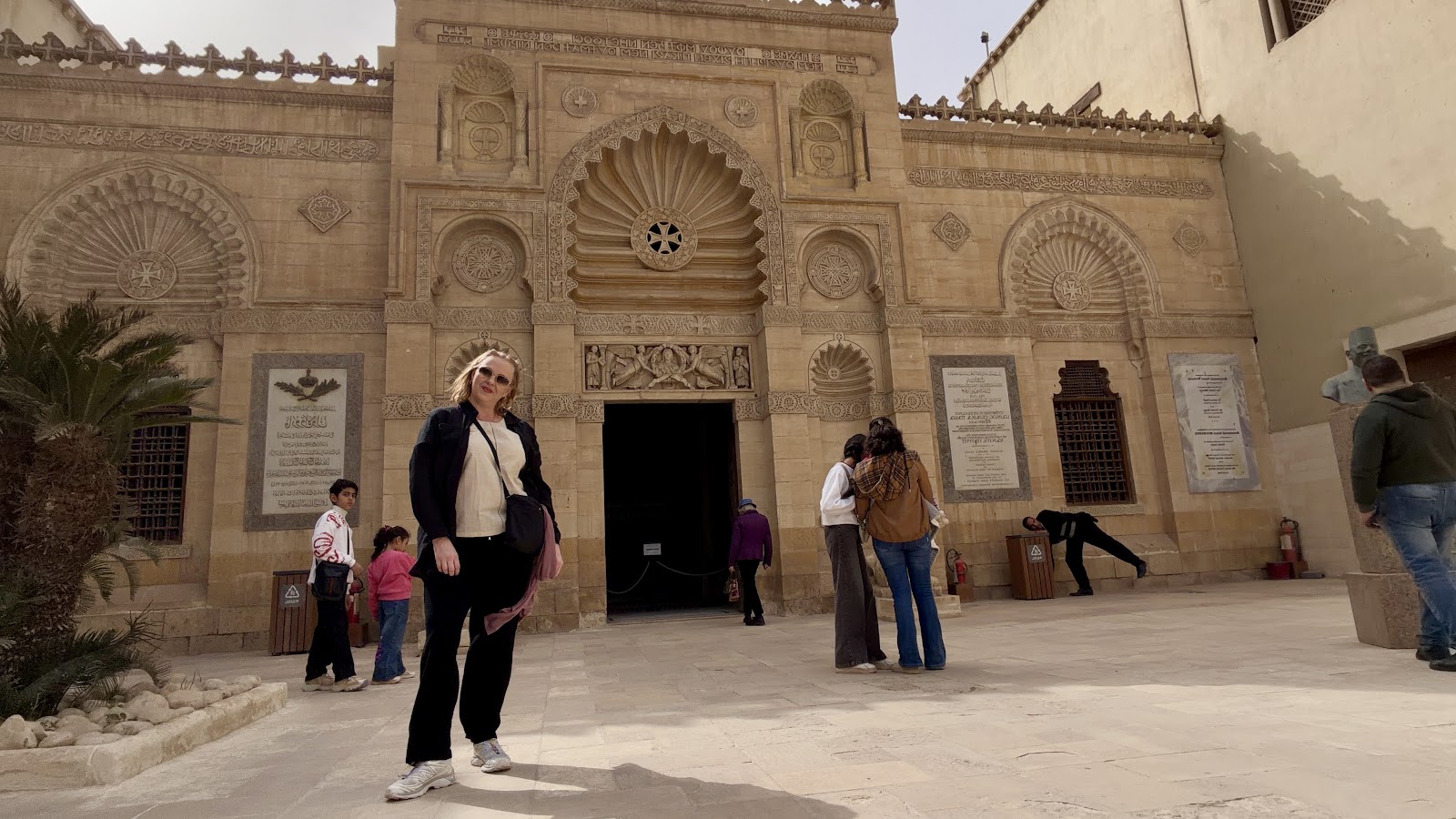
The Hanging Church, also known as Saint Virgin Mary’s Coptic Orthodox Church, is one of the best-known religious landmarks in Old Cairo.
The church was constructed above part of an ancient Roman fortress, which is the origin of its unusual name. Inside, visitors can appreciate Coptic religious art, architectural details, wooden screens and historic icons.
I find churches and religious buildings especially interesting because they’re places where architecture, artistic traditions and community history come together. You can learn an enormous amount about a society by looking at the places people have built for worship and the symbolism they’ve incorporated into them.
The Hanging Church is an important reminder that Egypt’s historical identity includes much more than the pharaohs and temples that dominate most travel itineraries.
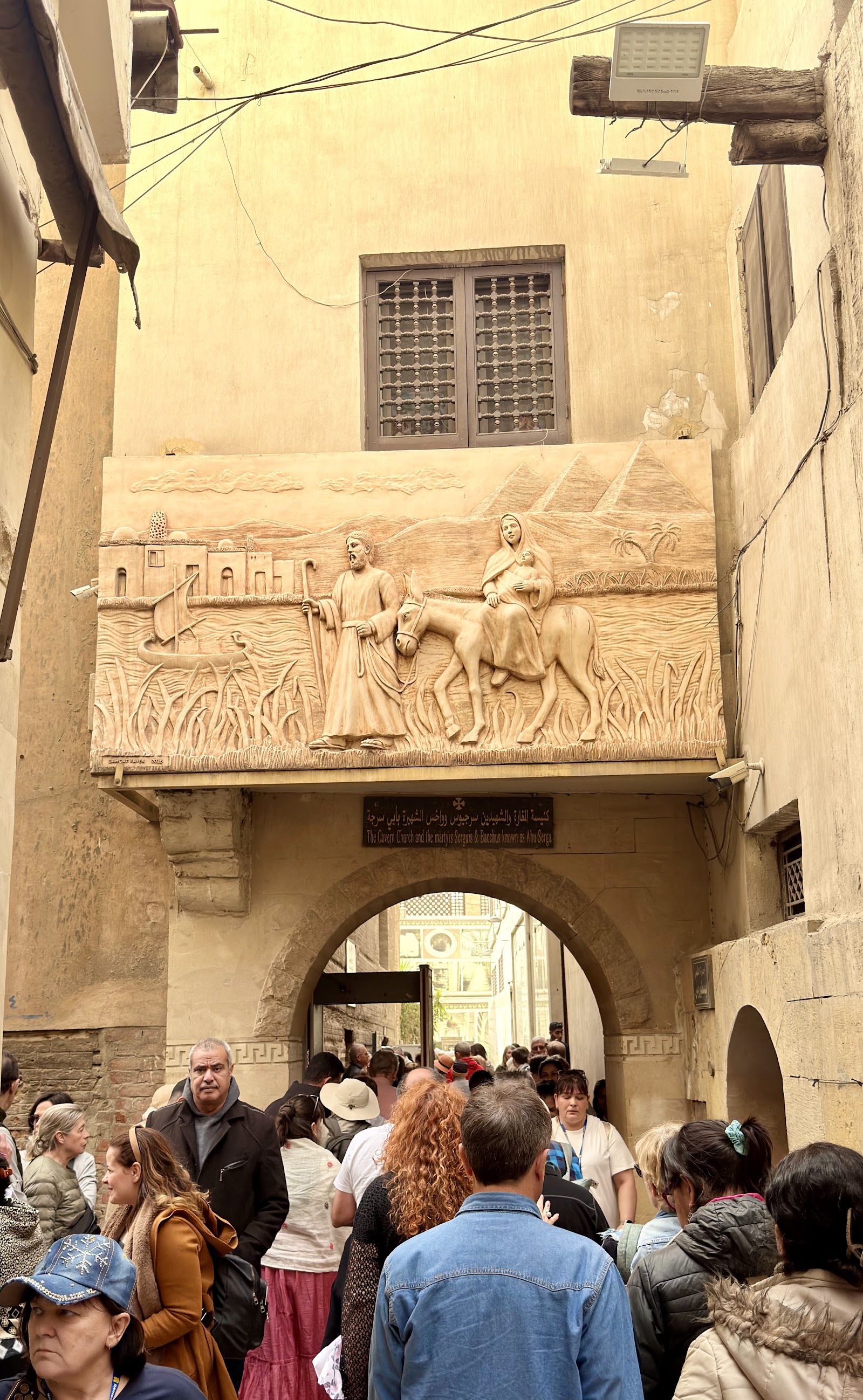
Another particularly interesting site in Coptic Cairo is the Church of Saints Sergius and Bacchus, also known as Abu Serga.
The church holds special religious significance because of its traditional association with the Holy Family’s journey through Egypt. The story connects the site to Christian traditions concerning Mary, Joseph and Jesus seeking refuge in Egypt.
I visited a Coptic site associated with the place where the Holy Family is traditionally believed to have sheltered, and I found it fascinating to encounter this part of Egypt’s religious history alongside the much older monuments elsewhere in the country.
It’s important to recognize that these associations are part of religious tradition rather than presenting every detail as an independently established historical fact. But they remain deeply meaningful within Coptic Christianity and contribute to the importance of the area.
For visitors interested in religious heritage, the combination of the church, its architectural features and the traditions associated with it offers another perspective on Cairo’s history.
I also visited Ben Ezra Synagogue in Old Cairo, another site that adds important context to the area’s religious history.
The synagogue is associated with Cairo’s historic Jewish community and is particularly famous for the Cairo Geniza, an extraordinary collection of historical documents that provided insight into Jewish communities and everyday life over many centuries.
What interests me about visiting places like this is the opportunity to understand how different communities lived within the same city and how their histories influenced one another.
You can visit the famous monuments of ancient Egypt and still miss an enormous amount of the country’s cultural history if you don’t make time for places such as Coptic Cairo and its historic religious buildings.
I’d recommend approaching these sites with respect for their religious significance, checking current visiting hours and dressing appropriately for places of worship.
Another site I visited was the Mosque of Muhammad Ali, located within Cairo’s historic Citadel of Saladin.
It’s sometimes called the Alabaster Mosque because of its extensive use of alabaster-coloured stone and marble decoration, and it’s one of the city’s most recognizable Islamic landmarks.
The mosque’s domes, minarets and interior architectural details make it an extraordinary place to visit, particularly if you enjoy historic buildings.
What I find so compelling about Cairo is that you can move between completely different architectural traditions within the same city. The ancient monuments at Giza, the churches of Old Cairo and the great mosques of Islamic Cairo all tell parts of a much larger story.
I think it’s worth spending time understanding those differences rather than approaching every attraction as simply another famous building to photograph.
The Citadel also offers opportunities to appreciate the surrounding city from elevated viewpoints, although visibility can vary depending on haze and weather.
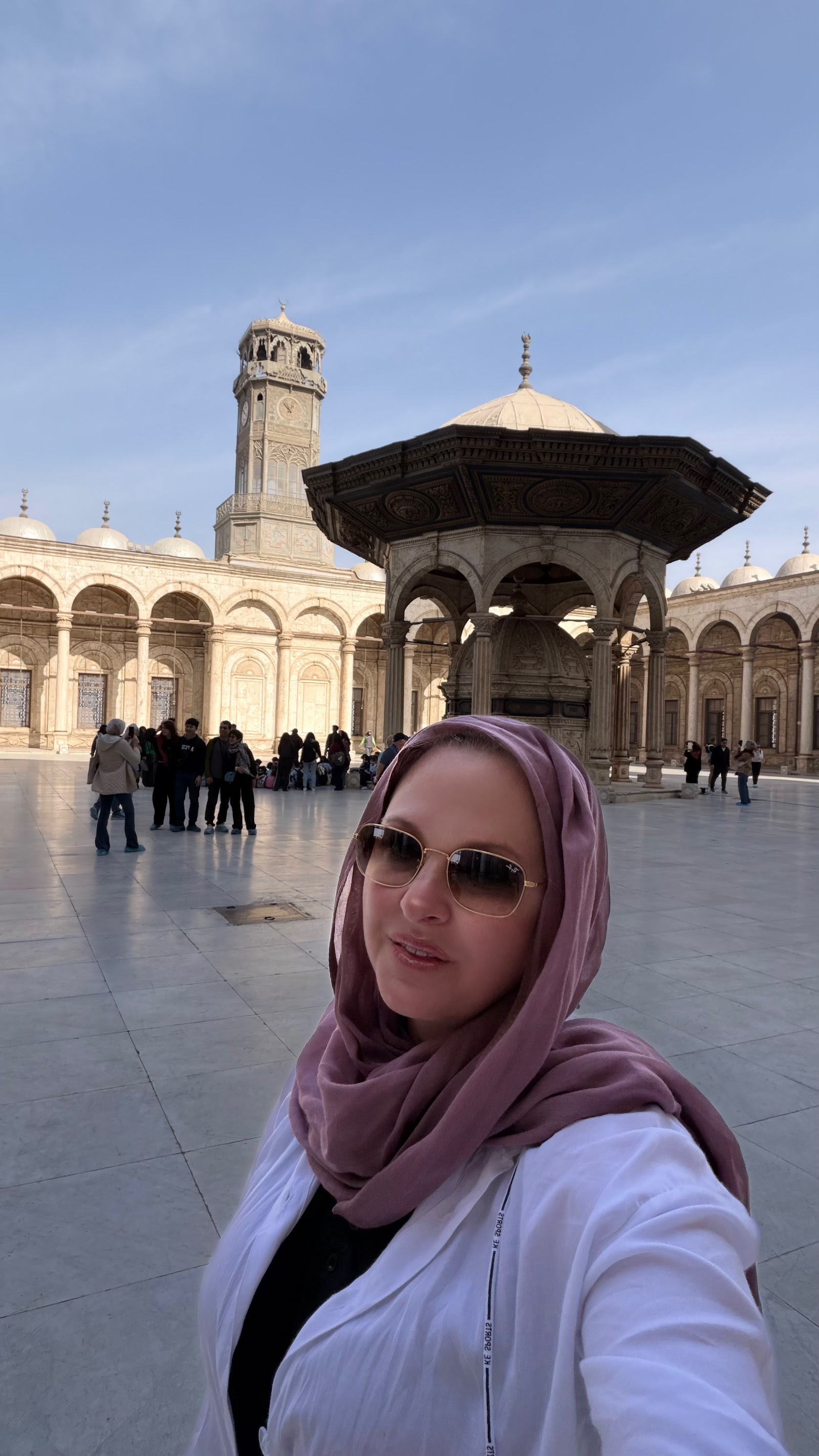
I’d recommend wearing clothing appropriate for a place of worship and following local visitor instructions about shoes, photography and restricted areas.
No first-time Cairo itinerary feels complete without at least some time exploring the markets.
I visited Egyptian bazaars during my trip, and they offered a completely different experience from the archaeological sites and religious buildings.
Khan el-Khalili is Cairo’s best-known historic bazaar, with narrow lanes, shops, traditional crafts, spices, jewellery, decorative lamps and all sorts of other items competing for your attention.
It’s the kind of environment where the atmosphere is as much part of the experience as the shopping. There’s movement, conversation and plenty happening around you, and it can be fascinating to observe the way commerce and everyday life unfold within a historic district.
I enjoy markets because they provide insight into a place beyond the monuments. They’re where you encounter food, products, interactions and traditions that contribute to the city’s personality.
But I’d also recommend arriving with realistic expectations. Popular tourist markets can involve persistent sales approaches, bargaining and situations where visitors need to be clear about whether they’re interested in buying something.
I don’t think that means the experience should be avoided. It simply helps to understand what you’re walking into and remember that you aren’t obligated to purchase anything just because somebody has started a conversation.
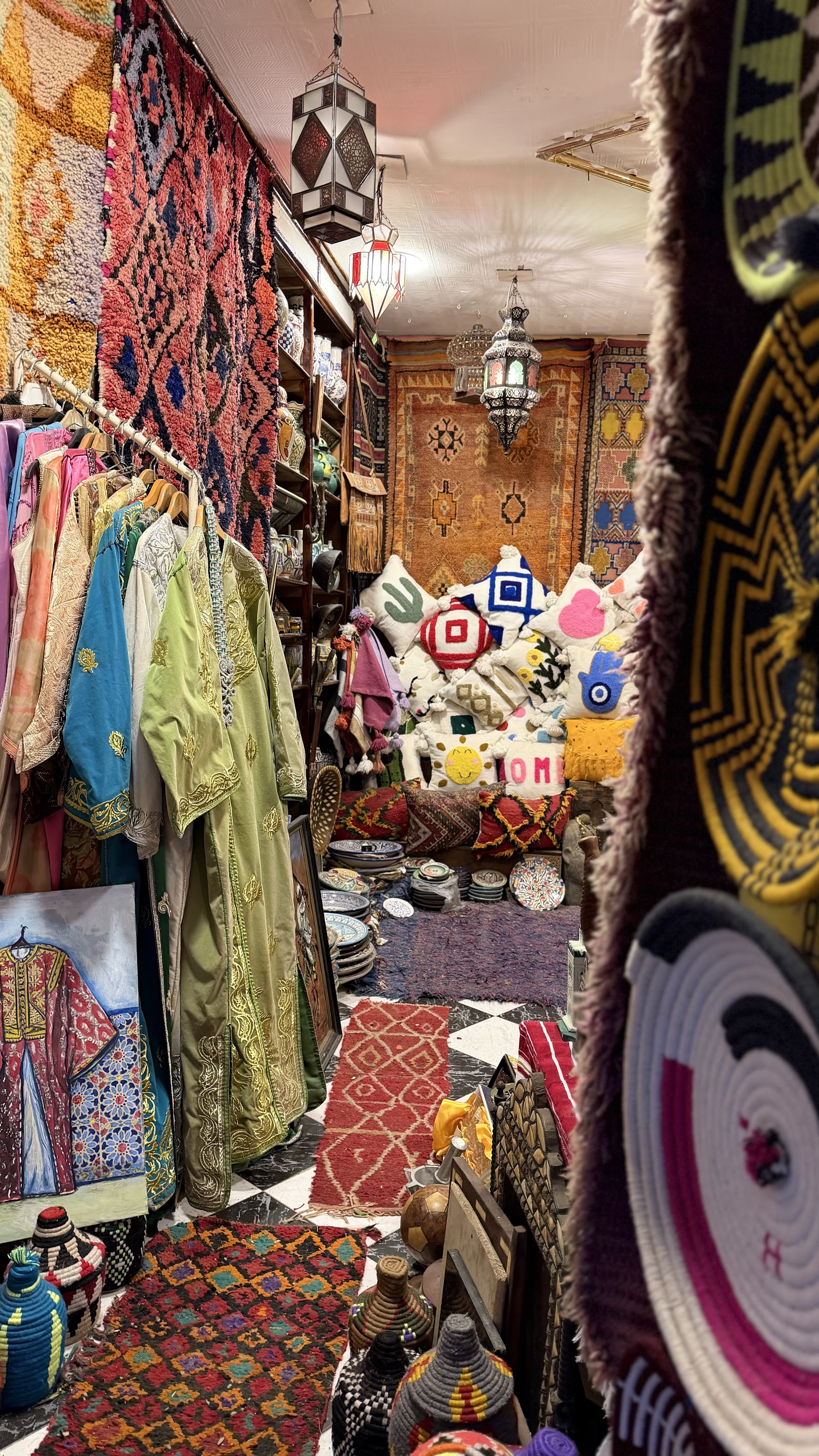
If you’re uncomfortable navigating a busy market independently, visiting with a reputable guide can be a good introduction, particularly when you’re interested in understanding the history and culture of the surrounding area.
Cairo’s museum options have changed significantly with the full opening of the Grand Egyptian Museum near Giza in November 2025.
The museum is a major attraction for visitors interested in ancient Egyptian civilization, with extensive galleries, the Tutankhamun collection, large monumental displays and King Khufu’s famous ancient boat.
I would certainly include the museum when planning a current first-time itinerary, particularly if you’re interested in the history behind the monuments you’ll be seeing elsewhere.
The museum is located near the Giza Plateau, but that doesn’t mean I’d automatically rush through both attractions in a few hours. There’s enough to appreciate at the museum to justify setting aside several hours, especially if you enjoy detailed exhibits.
The Grand Egyptian Museum currently requires advance online admission reservations with a selected entry time. Standard gallery hours are generally 9 AM to 6 PM, with extended evening hours on Wednesdays and Saturdays, but I’d verify the schedule before visiting.
Recommended experience: Grand Egyptian Museum, Pyramids, Sphinx and Lunch →
I’d also make an important distinction between this museum and the historic Egyptian Museum in Tahrir Square. They’re separate institutions, and visitors should check which collections and exhibitions are housed at each rather than assuming every famous artifact is in the same building.
The present-day Timeless Tours itinerary includes a guided visit to the Grand Egyptian Museum, but tour itineraries can change over time. If you’re booking the same tour I took, confirm what is currently included and whether any museum admission or special experiences involve additional charges.
One of the things I always look forward to when visiting a new country is experiencing the local food.
Food tells us so much about the way people live, and I think it’s one of the most accessible ways to begin understanding a different culture. Markets, neighbourhood restaurants and traditional dishes can reveal just as much about a destination’s everyday personality as a major historic attraction.
Egyptian food deserves attention beyond the meals included in sightseeing tours, particularly if you’re visiting Cairo for several days.
These are some of the traditional dishes I’d suggest looking for during your trip.
Koshari is one of Egypt’s most recognizable dishes, made with a combination of rice, lentils, pasta, chickpeas, tomato sauce and crispy onions.
It’s filling, inexpensive and a particularly interesting example of how different ingredients and culinary influences can come together in a much-loved everyday meal.
Ful medames is a traditional dish made from cooked fava beans, often seasoned and served with bread.
Taameya is the Egyptian version of falafel, typically made with fava beans rather than chickpeas. Both are common breakfast or street-food options and worth considering if you enjoy trying local everyday dishes.
Hawawshi is a savoury Egyptian dish made with seasoned minced meat enclosed in bread and baked or cooked until the outside becomes crisp.
It’s a good option for anyone interested in something substantial and different from the dishes they may already be familiar with.
Molokhia is a traditional green stew made from finely chopped leafy greens and commonly seasoned with garlic and coriander.
It’s often served with rice or bread and sometimes accompanied by meat, depending on the preparation.
For dessert, Om Ali is a traditional Egyptian bread-pudding-style dish made with pastry or bread, milk, nuts and other ingredients.
It’s worth looking for if you enjoy trying local sweets rather than automatically choosing something familiar.
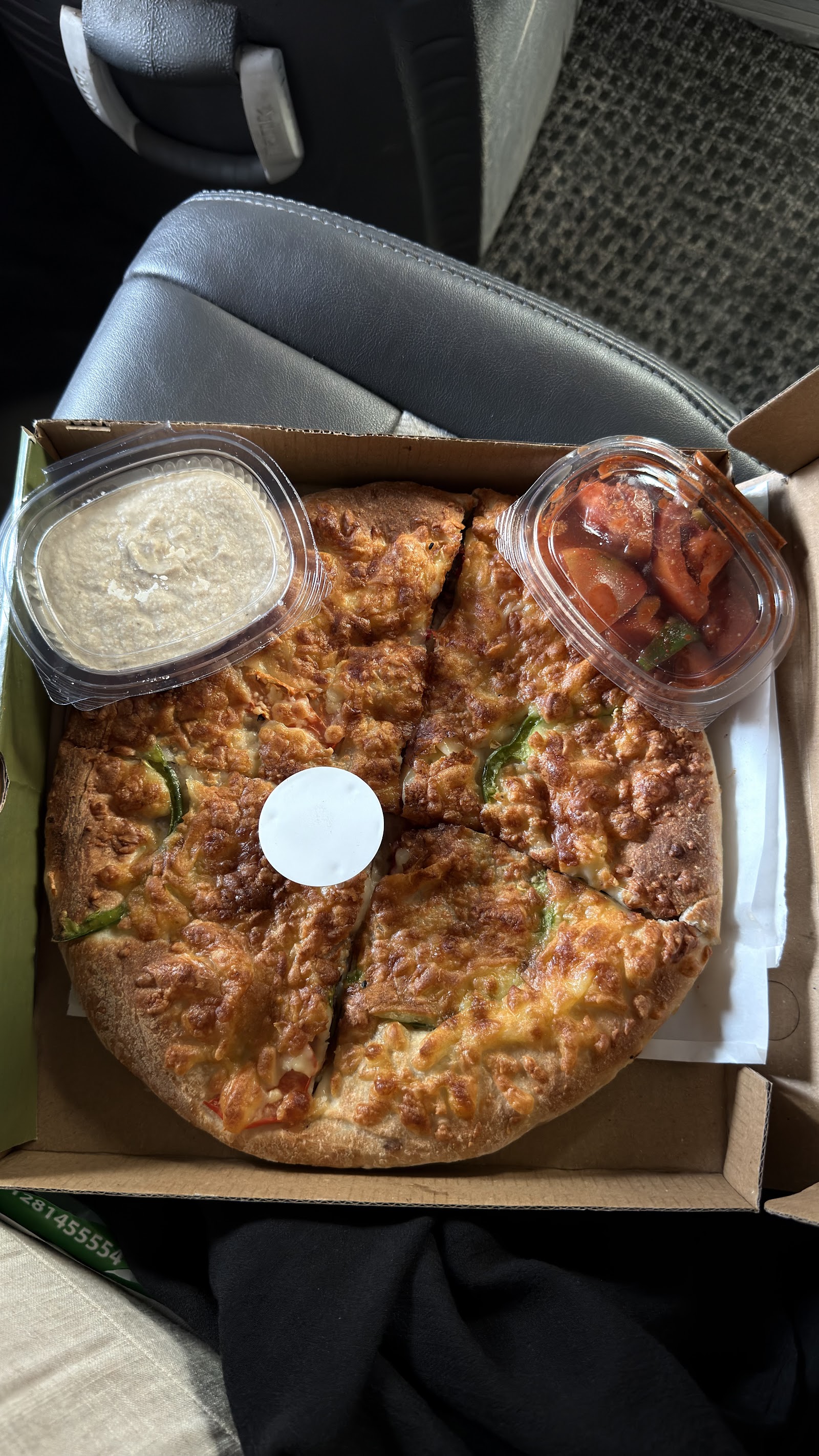
One thing I’d consider in Cairo is joining a reputable food experience if you’re interested in discovering local dishes but unsure where to begin. A guided food walk can help you explore different specialties while learning about the neighbourhoods and traditions associated with them.
Recommended experience: Dinner with a Local Family and Egyptian Cooking Class →
I’d also use ordinary food-safety judgment, particularly when travelling somewhere unfamiliar. Choose establishments with good food handling practices, pay attention to how dishes are stored and served, and use drinking water from a source you trust.
The point isn’t to become afraid of trying anything new, but to enjoy local food without unnecessarily increasing the chance of spending the following day feeling unwell.
Cairo is enormous, and where you stay can have a significant effect on the amount of time you spend travelling between attractions.
For first-time visitors, I’d think about what you most want to see rather than choosing accommodation solely because it offers a particularly attractive view or a low nightly rate.
Staying in Giza can be convenient if the pyramids and the Grand Egyptian Museum are major priorities.
There are hotels offering views toward the pyramids, which can be an appealing part of the experience, particularly if this is your first visit to Egypt.
The trade-off is that attractions in central Cairo and the historic districts can require longer journeys, depending on traffic and the location of your accommodation.
Zamalek, on Gezira Island in the Nile, is another neighbourhood worth researching.
It’s known for restaurants, cafés, cultural venues and a different atmosphere from the busy streets near some of Cairo’s major tourist attractions.
I’d consider it if you want to enjoy the city beyond the pyramids and appreciate being close to dining and local amenities.
Downtown Cairo offers access to historic urban architecture, museums and a more central city environment.
Garden City is another area visitors sometimes consider for accommodation, particularly when looking for hotels near the Nile and central Cairo.
These neighbourhoods can be practical depending on your sightseeing priorities, but I’d still research the exact streets and current property reviews rather than assume that every accommodation within a named district offers the same experience.
I pay particular attention to recent reviews from other solo female travellers, comments about security and the surrounding area, and whether guests felt comfortable arriving or returning to the property.
One of the biggest adjustments for first-time visitors can be Cairo’s traffic.
The city is busy, and getting between attractions can take more time than distances on a map might suggest. I wouldn’t organize an itinerary based solely on how many kilometres separate two places.
For independent sightseeing, reputable ride-hailing services or prearranged drivers can be useful, depending on the area and current availability. If you’re booking guided experiences, check whether hotel pickup and return transportation are included.
I would also avoid assuming that walking between attractions is always straightforward. Some historic districts are enjoyable to explore on foot, but other parts of the city have heavy traffic, difficult crossings and streets that aren’t particularly comfortable for pedestrians.
For my first visit, having an organized tour helped reduce the amount of transportation planning I needed to manage personally. That was particularly valuable because Egypt was a destination I’d felt nervous about beforehand.
If you’re travelling independently, I’d recommend organizing your airport transfer before departure, saving your accommodation’s address and downloading offline maps.
Stay connected: Holafly eSIM →
Having access to mobile data can be especially useful for checking directions, translating information, using ride-hailing services and contacting your accommodation.
I’d still keep essential information available offline because you don’t want your entire arrival plan to depend on your phone maintaining a perfect connection.
I want to address safety directly because I think it would be misleading to write about my visit to Egypt without acknowledging that I was genuinely nervous.
Before arriving, I’d heard enough warnings and conflicting opinions to make me question whether the trip was a sensible decision. As a woman travelling mostly solo, I knew there were legitimate considerations that deserved attention.
My experience in Egypt didn’t completely erase those concerns. Overall, I wouldn’t describe myself as feeling incredibly safe throughout the visit. Certain environments made me more aware of my surroundings, and there were moments when I felt uncomfortable or vulnerable.
But I also met kind and welcoming people and discovered places that challenged some of the assumptions I’d made before arriving.
I think that distinction matters because travel experiences are rarely as simple as saying a country is either safe or unsafe. Individual circumstances, neighbourhoods, activities and the people you encounter can influence your experience enormously.
For me, preparation and awareness were important. I researched the destination, made informed choices about how I travelled and paid attention to my instincts rather than assuming every unfamiliar situation was harmless.
I also appreciated having a structured itinerary that allowed me to visit major attractions with a guide and shared transportation.
That doesn’t mean everybody should book a tour or that guided travel guarantees safety. It simply means that choosing an appropriate level of structure can be a sensible option, particularly when you’re visiting somewhere that makes you nervous.
I’d recommend checking current government advisories before booking. Canada’s travel advice for Egypt currently recommends exercising a high degree of caution nationally and provides more restrictive warnings for certain regions.
Official safety resource: Government of Canada Travel Advice and Advisories for Egypt →
I have a few personal habits that have become part of my travel routine, including keeping my phone secured with a wrist strap, using a small ribbon to help secure the zipper on my purse and sharing my live location with somebody I trust.
I also prefer knowing how I’m going to get from the airport to my accommodation and will pay more for reputable transportation when an alternative makes me uncomfortable.
I’ve written about those habits, along with my experiences in Egypt and Rio de Janeiro, in another article about staying aware without allowing fear to dictate every travel decision.
Related read: Solo Travel Safety: How I Stay Aware Without Letting Fear Run the Trip →
I don’t want to romanticize destinations or dismiss legitimate risks, but I also don’t want other people’s fears to prevent me from experiencing places that fascinate me.
Egypt is an important example of why I continue trying to find that balance.
If I were planning a first-time Cairo visit independently, I’d allow three full sightseeing days rather than trying to squeeze the entire experience into a rushed stopover.
This itinerary combines major archaeological sites, museums, historic neighbourhoods and time to experience the city itself.
I’d begin with the Giza Plateau and allow enough time to appreciate the pyramids and Sphinx properly.
If you want to go inside the Great Pyramid, confirm the separate ticket and make sure you’re comfortable with the physical conditions before booking.
I’d then consider visiting Saqqara with a guide or organized driver. The archaeological significance of the Step Pyramid provides useful context for understanding how ancient Egyptian pyramid construction developed.
This would be a full sightseeing day, so I wouldn’t plan a long evening of additional attractions.
I’d devote the second day to Cairo’s religious and architectural heritage.
Coptic Cairo would be a priority, including the Hanging Church, the Church of Saints Sergius and Bacchus and Ben Ezra Synagogue, subject to current visiting access.
I’d also include the Mosque of Muhammad Ali within the Citadel and allow time to appreciate the architecture and historic setting.
Depending on timing and energy, Khan el-Khalili could be a wonderful way to experience the market atmosphere later in the day.
I think this is the day that would most clearly demonstrate how much more Cairo offers beyond its ancient pyramids.
For the third day, I’d reserve a timed admission to the Grand Egyptian Museum and allow several hours to appreciate the galleries.
Rather than rushing immediately to another major attraction, I’d leave some time for a relaxed meal, a café or a neighbourhood experience.
If you particularly enjoy museums, you could consider the historic Egyptian Museum at Tahrir Square on another day, but I wouldn’t necessarily recommend trying to fit both large museums into a crowded schedule.
I would also give myself some flexibility because Cairo’s traffic and the scale of its attractions can make days more tiring than they initially appear.
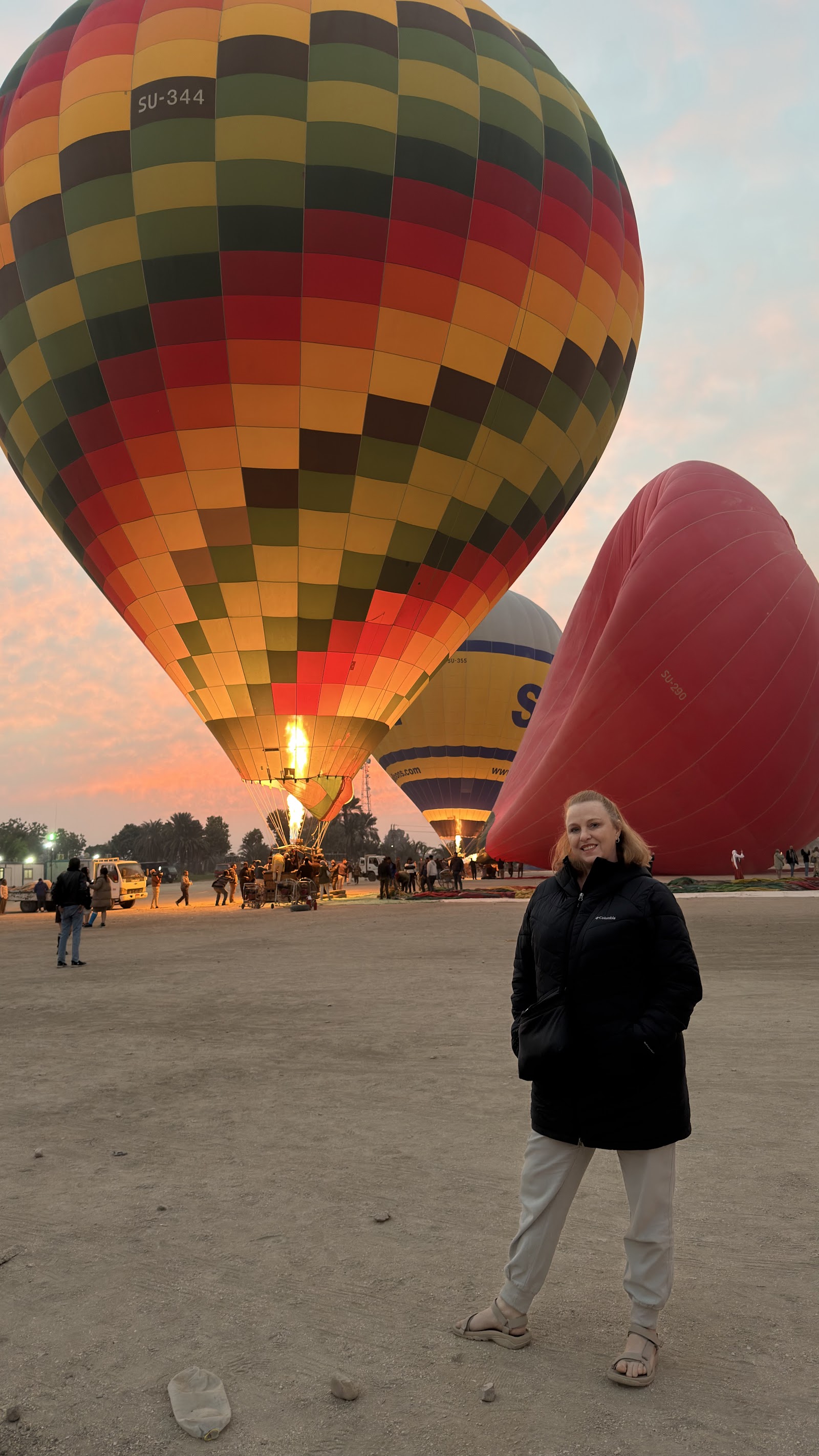
Cairo is a fascinating destination on its own, but I was glad to experience more of Egypt during my trip.
The ten-day tour I booked continued beyond Cairo, combining major archaeological sites with the Nile and the Red Sea.
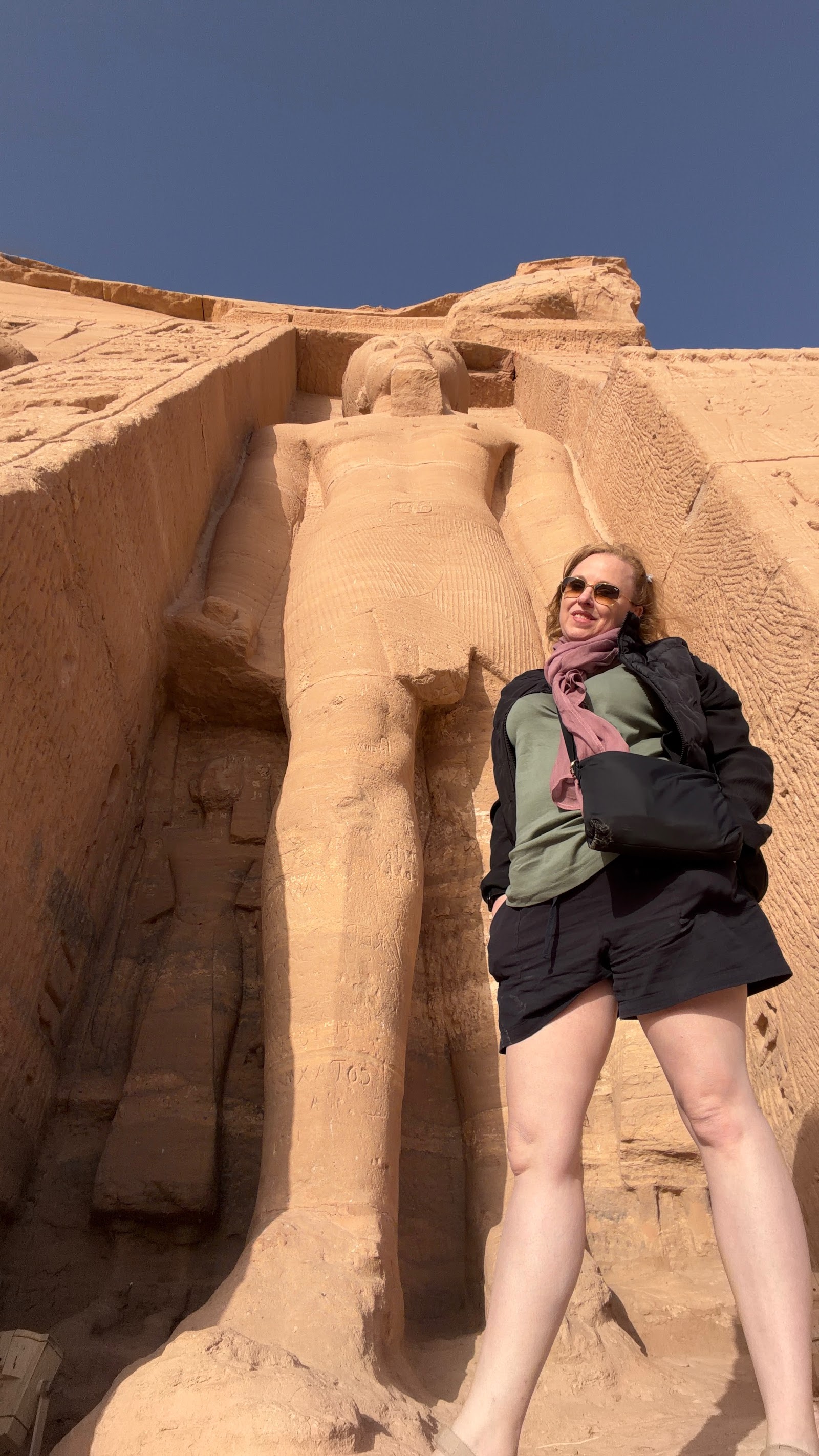
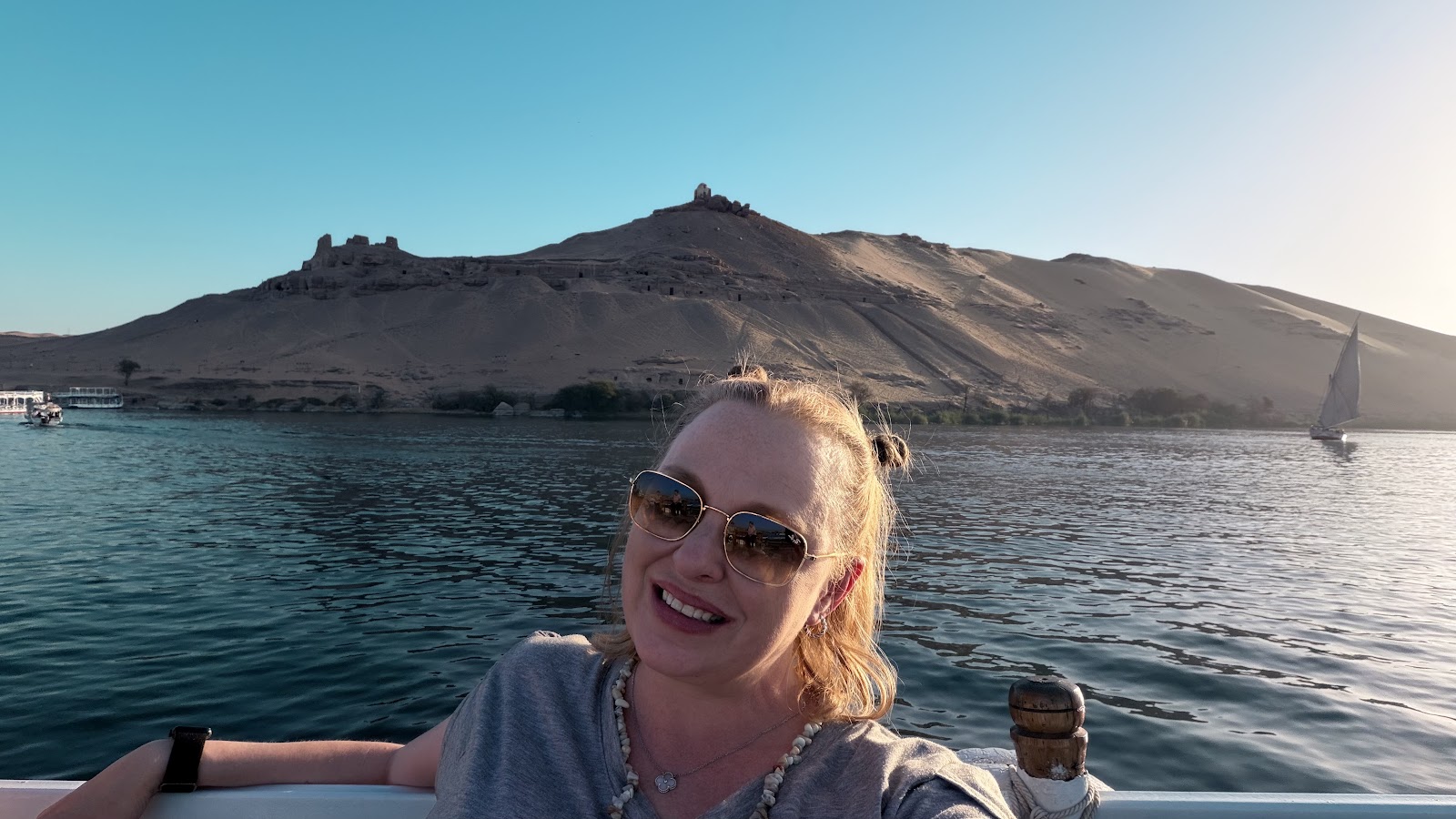
The published Timeless Tours itinerary includes Aswan and Philae Temple, sailing on the Nile, Kom Ombo, Luxor’s major temple complexes, the Valley of the Kings, Hatshepsut’s Temple and time in Hurghada.
The tour also advertises optional experiences such as Abu Simbel and Red Sea activities, which should not be confused with the standard included itinerary.
One of my favourite things about exploring Egypt more broadly was discovering how different the experiences could be. Cairo has its distinctive energy, while the Nile, ancient temples and coastal environments introduce visitors to other aspects of the country.
And some of the people I met during my Egypt travels became a particularly memorable part of the journey. Those conversations and connections have continued to influence how I think about travelling, storytelling and the experiences that shape our lives.
For anybody interested in a longer introduction to Egypt, I’d compare an organized itinerary with planning the journey independently. A guided tour can offer convenient logistics and cultural explanations, but you should still examine the daily schedule, pace, inclusions and optional costs carefully.
Tour I booked: Best of Egypt – 5 Star Cruise by Timeless Tours (10-Day Guided Egypt Tour) →
Cairo can offer good value in certain categories, particularly local food and some accommodation, but it’s worth remembering that sightseeing costs can accumulate quickly.
Major archaeological sites often charge admission, some attractions require additional tickets and hiring guides or private transportation can significantly affect your daily budget.
One thing I would be especially careful about is understanding what is included in a tour price. A listed itinerary may include transportation and guiding but not all attraction admissions, optional activities, gratuities or additional experiences.
If you’re booking a multi-day itinerary, compare the complete cost rather than assuming the advertised starting price represents everything you’ll spend.
I’d also check current official ticket prices close to the date of travel. Museum and archaeological attraction fees can change, and older blog posts sometimes continue displaying prices that are no longer accurate.
There are several things I’d want a first-time visitor to understand before arriving, particularly if they haven’t travelled extensively in similar environments.
Cairo is not a quiet introduction to Egypt. It’s a busy, enormous city where traffic, noise, crowds and unfamiliar systems can make even ordinary activities feel demanding. I’d build in enough time to settle in rather than scheduling a packed sightseeing day immediately after an exhausting flight.
The pyramids are in Giza, not beside every central Cairo hotel. Choosing your accommodation location and understanding transportation times can make a substantial difference to your itinerary.
Going inside a pyramid is not included in ordinary plateau admission. If that’s something you want to experience, check the separate ticket, conditions and physical demands beforehand.
You need more than one historical district to appreciate Cairo. The pyramids are extraordinary, but Coptic Cairo, the Citadel, the mosques, synagogues and bazaars reveal different periods and communities that have shaped the city.
A guide can make ancient history considerably more interesting. When you’re standing in front of a monument that has existed for thousands of years, having somebody explain its historical context adds depth to what you’re seeing.
Not every uncomfortable situation means a destination is entirely unsafe, but genuine concerns shouldn’t be ignored. I didn’t feel completely at ease everywhere in Egypt, and I think it’s possible to acknowledge that while appreciating the extraordinary experiences the country offers.
Cairo deserves time beyond the photographs. I wouldn’t want to visit the pyramids, take a few pictures and leave without exploring the city’s food, religious heritage and everyday culture.
And perhaps most importantly, I’d encourage anyone visiting Egypt for the first time to arrive with an open mind but realistic expectations. It’s a destination that can challenge you, surprise you and reward your curiosity, sometimes in ways that are difficult to anticipate before you’ve actually been there.
I’d recommend three to four full sightseeing days for a first visit. That provides enough time to explore Giza, Saqqara, major museums and some of Cairo’s historic neighbourhoods without trying to fit everything into one exhausting day.
Safety depends on the specific circumstances, neighbourhoods and activities involved. I personally felt nervous before visiting and didn’t feel entirely comfortable in every environment, although I also encountered welcoming people and rewarding experiences. I’d recommend researching current advisories, choosing accommodation carefully and considering organized sightseeing or reputable transportation where appropriate.
Yes, independent visits are possible. However, a reputable guide can provide historical context and help manage practical arrangements. I’d particularly consider a guide if you’re visiting Giza and Saqqara together or want to understand the sites beyond the basic descriptions.
Yes, when interior access is available, but it requires a separate ticket from general plateau admission. The internal passageways can be steep and confined, so the experience may not suit visitors with mobility difficulties or discomfort in enclosed spaces.
Yes. The Grand Egyptian Museum fully opened to the public in November 2025. Visitors should book admission through the museum’s official ticketing website and check current hours and ticket availability.
I’d recommend comfortable, modest clothing that respects the cultural setting and suits the weather. Loose trousers, longer skirts, tops that cover the shoulders and a light scarf can be practical choices, particularly when visiting religious buildings. Individual attractions may have additional dress requirements.
Absolutely. Coptic Cairo, the Citadel, Islamic Cairo, historic markets, museums and Egyptian food all offer reasons to spend more time in the city. For me, the combination of different historical periods and cultural influences is one of Cairo’s greatest attractions.
It depends on your interests, travel experience and preferred level of independence. I chose a ten-day guided journey and appreciated having a structured way to explore several major regions. I’d compare the pace, accommodation, inclusions and optional expenses carefully before booking.
When I think back on Egypt, I remember much more than the pyramids, although standing beside those enormous ancient monuments and actually going inside the Great Pyramid were extraordinary experiences.
I remember the different layers of history, from the archaeological sites at Giza and Saqqara to the ancient churches and religious buildings of Old Cairo. I remember exploring places associated with the Holy Family, visiting Ben Ezra Synagogue and admiring the architecture of the Mosque of Muhammad Ali.
I remember the energy of the bazaars and the opportunity to encounter aspects of everyday Egyptian life beyond the major attractions.
And I remember the people I met, the conversations we had and the way a shared journey through an unfamiliar country became part of my larger experience of travelling the world.
I also remember being nervous. I don’t feel the need to rewrite that part of the story simply because I had rewarding experiences along the way.
Egypt was a destination where I was conscious of my surroundings and occasionally uncomfortable, and I think that’s an important part of describing the visit accurately. Some concerns were justified, while other assumptions became more complicated once I actually experienced the places and people I’d previously known mostly through stories.
What I took away wasn’t a belief that every warning about Egypt should be ignored. It was a stronger appreciation for how much more complicated a destination can be than the version we imagine before arriving.
I wanted to experience ancient history, learn about different cultures and discover what Egypt was like beyond the headlines. I had the opportunity to do those things, and the journey introduced me to experiences and people I continue thinking about long after leaving.
Cairo isn’t necessarily an easy destination, and I wouldn’t pretend otherwise. It can be chaotic, demanding and overwhelming, particularly when you’re unfamiliar with the environment.
But it’s also a place where thousands of years of history exist alongside a modern city filled with everyday life, and where a single itinerary can introduce you to extraordinary contrasts in architecture, religion, culture and human experience.
If you’re visiting for the first time, my advice would be to prepare thoughtfully, give yourself enough time, consider a guide when it makes sense and approach the experience with both curiosity and good judgment.
See the pyramids, certainly. But make time for the churches, the mosques, the museums, the markets and the food. Ask questions, listen to the stories and give yourself the opportunity to understand something about the country beyond the images that originally inspired you to visit.
For me, that’s what makes travel worthwhile. It isn’t simply about seeing famous places, but about discovering how much more there is to understand once you’ve actually been there.
Affiliate disclosure: This article contains affiliate links. If you book through them, I may earn a commission at no additional cost to you.


One Response