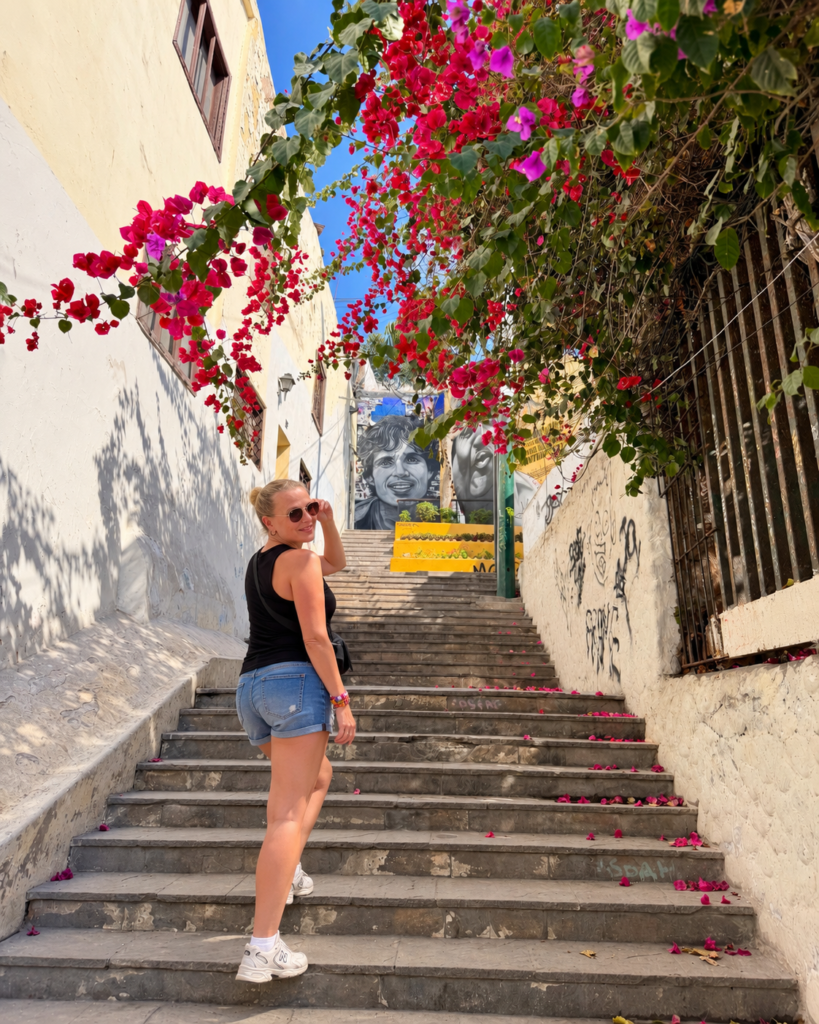

I spent around two weeks in Beijing during the year I lived and taught in China. I came for the history; the Great Wall, the Forbidden City, the palaces and ancient neighbourhoods but what stayed with me was something more complicated and much more personal. China challenged some of the assumptions people make about life there, and Beijing became one of the most memorable parts of a chapter I still look back on with real affection.
When people hear that I lived in China for a year, they often have questions. Sometimes they’re about the food or the language, but quite often they’re about what daily life was really like. Did I find it restrictive? Was everything as technologically advanced as people say? How did I manage the rules, and what were the people like? I understand the curiosity because, before moving there, I had some fairly definite expectations of my own.
I expected advanced technology and an environment where rules and systems were a visible part of daily life. In many respects, I found exactly that. What I hadn’t anticipated was quite how much I’d enjoy living and working there. I taught, developed a routine, enjoyed a work–life balance that gave me time to experience the country, and travelled whenever I could. I found many people reserved at first but genuinely kind, and I came away with a warmth toward that chapter of my life that has stayed with me.
I also felt a degree of freedom in my own everyday experience that might surprise people whose impression of China comes primarily from political headlines. That is not a sweeping statement about everybody’s circumstances or freedoms in China; it’s simply an honest description of my life during that year. I was comfortable working within established rules and structures, perhaps partly because of my military background, and I had room outside work to explore, learn and enjoy myself. I know other people have had very different experiences, and I think it’s important to leave space for that distinction.
Beijing was one of the places I was fortunate enough to visit while living elsewhere in the country. I spent approximately two weeks there during autumn or early winter, long enough to see several extraordinary historic landmarks without feeling that I had to disappear after a frantic forty-eight hours. I visited the Forbidden City, Tiananmen Square, the Temple of Heaven, the Summer Palace, traditional hutongs and the Great Wall. Even writing that list reminds me how much history can be packed into one city.
Yet the thing I remember isn’t simply moving between famous attractions. It’s how Beijing added another layer to my understanding of a country where I had begun building an ordinary life. There’s a difference between arriving in China as a tourist and travelling through it after you’ve already learned something about its everyday systems, rhythms and people. Beijing gave me the monumental history; the year of living there helped me see it as part of a much larger story.
WeChat was part of daily life when I lived in China, and I seemed to discover another feature or useful function every time I thought I’d finally got the hang of it. I knew the country was technologically advanced before I arrived, but knowing that in theory is quite different from using unfamiliar systems to get through an ordinary day. Once I understood how things worked, I appreciated the convenience. Getting to that point sometimes meant accepting that I was a beginner again, which is a fairly familiar feeling when you live abroad.
For visitors now, mobile payments can be one of the biggest practical adjustments. WeChat Pay and Alipay accept supported international cards, but setting them up before you need to pay for something is much easier than trying to troubleshoot an account at a counter with people waiting behind you. I’d have more than one payment option and keep a little local currency as a backup rather than assuming every card or app will work in every circumstance.
Official resource: Beijing Government Guide to Wechat Pay, Alipay and International Bank Cards →
I found many people in China somewhat reserved, but I also experienced real kindness. Those two things are not contradictory. We can be quick to interpret someone’s quietness through our own cultural expectations, particularly when we don’t share a first language, but a reserved manner doesn’t tell you very much about a person’s generosity or willingness to help.
I value the people I meet while travelling, and the warmth I remember from China is part of why I look back so fondly on the year. I wouldn’t claim that every interaction was easy or that my experience speaks for everyone, but I would encourage visitors not to confuse a different communication style with a lack of welcome. Some of the best travel connections begin when we stop expecting every person to respond the way we’re accustomed to at home.
Perhaps the biggest surprise was how much I enjoyed the life I built while teaching. I appreciated the balance between work and personal time, and that made it possible to travel and explore places such as Beijing. I was not living in a permanent state of sightseeing. Like everybody else, I had work responsibilities, everyday errands and a routine, but I also had opportunities to get to know a country beyond an airport, hotel and organized excursion.
That distinction has become increasingly important to me in my travels. I love famous landmarks, but I also enjoy understanding how a place functions when nobody is performing a visitor experience for my benefit. Living abroad gives you a chance to see a different side of a destination, including the less glamorous moments when you simply need to get something done. China taught me a great deal about adapting, staying curious and becoming comfortable with not knowing everything immediately.
Beijing is enormous, and its major sights aren’t arranged like a small historic town where you can wander casually between everything in an afternoon. Imperial palace complexes, vast public squares, traditional residential lanes, parks and modern districts occupy different parts of the city. A short distance on a map can still involve a subway journey, security checks, a long approach to an entrance and quite a lot of walking once you’re inside.
I had about two weeks, which was a luxury compared with the pace of a typical first-time itinerary. For most visitors, I’d suggest at least five full sightseeing days if you want to see the principal historic attractions and spend a day at the Great Wall without rushing. A week would be better if you enjoy wandering, stopping for tea or coffee and leaving space for something you didn’t plan. With only three days, you’ll need to make choices, and that’s perfectly reasonable too.
Beijing is China’s capital, but it isn’t a complete summary of the country. My time teaching elsewhere reminded me how enormous and varied China is. You can learn a great deal by visiting Beijing’s famous sites, but I think the most interesting approach is to arrive curious and resist the temptation to believe that any single city or any single traveller’s account, can explain a place of that scale.
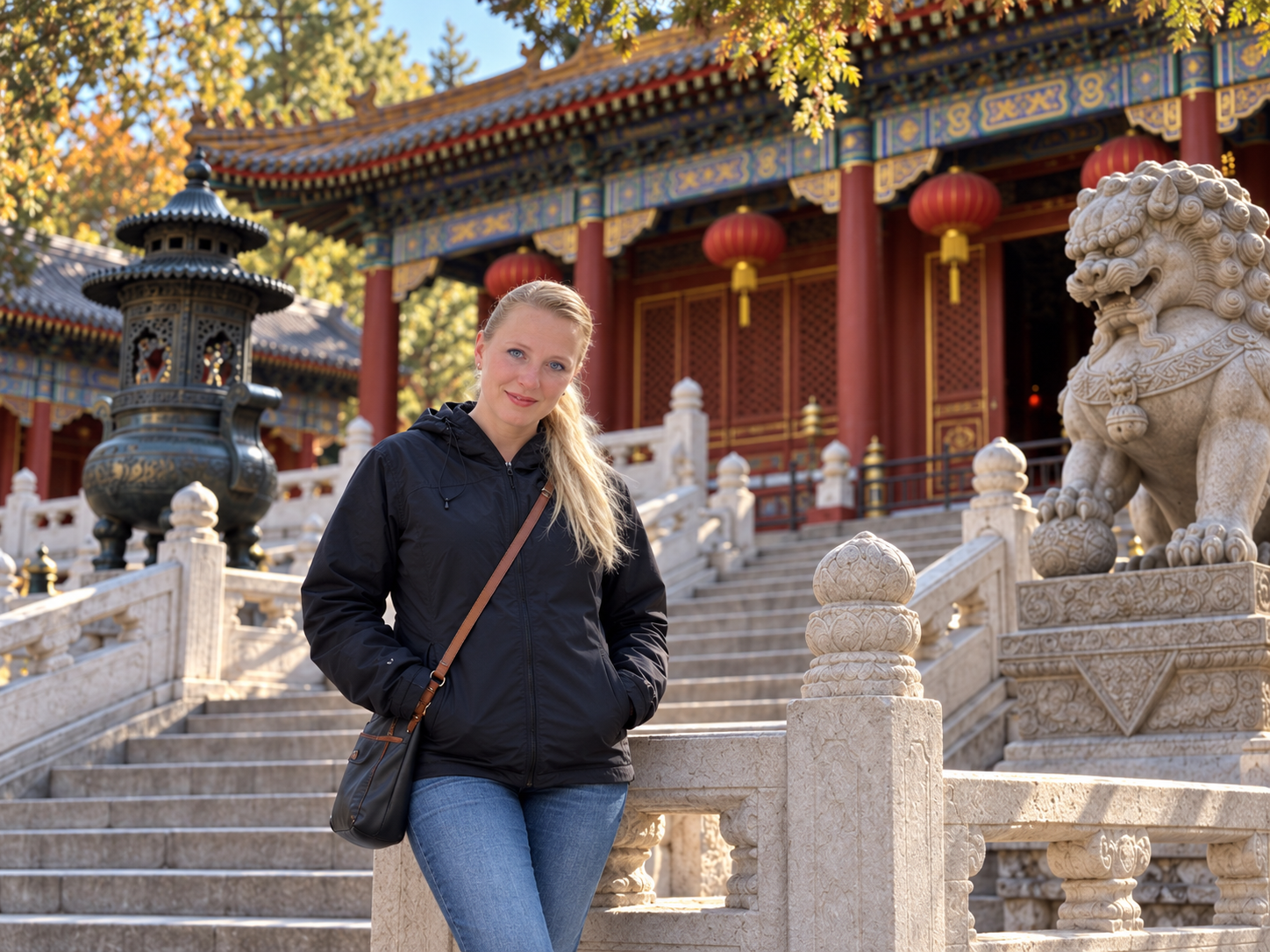
I visited the Forbidden City, home of the Palace Museum, and it’s one of the places I’d put near the top of a first-time Beijing itinerary. The former imperial palace of the Ming and Qing dynasties is vast. Its courtyards, ceremonial spaces, gates and layered rooftops communicate a sense of scale that can be difficult to appreciate from photographs alone.
This isn’t somewhere I’d treat as a quick stop between other attractions. I’d leave a substantial part of the day for it and consider a guide or audio interpretation, because knowing why particular buildings existed and how they were used changes the experience. The architecture is impressive enough on its own, but the historical context gives it depth.
The current standard admission is CNY 60 from April through October and CNY 40 from November through March, with separate charges for the Treasure Gallery and Gallery of Clocks. The museum generally closes on Mondays, except statutory holidays, and does not sell same-day tickets. I’d confirm the reservation procedure and use the passport details on my booking, then carry that passport on the visit.
Recommended experience: Temple of Heaven or the Summer Palace →
Tiananmen Square was another part of my visit. Its enormous scale and role in modern Chinese history make it a significant public space, but it’s also a place where visitors need to approach the practical arrangements carefully. It isn’t simply a matter of arriving at any entrance and walking straight through.
Today, reservations and security procedures can affect access. Beijing’s official visitor guidance directs foreign visitors to a Tiananmen Square reservation mini-program on WeChat and describes circumstances in which a confirmed reservation for another designated attraction may qualify for access. I’d check the specific requirements for the date I planned to visit rather than assume a booking for the Forbidden City automatically covers everything.
Official resource: Beijing Government Tiananmen Square Reservation Guidance for Foreign Visitors →
I also visited the Temple of Heaven, a ceremonial complex associated with the rituals of Ming and Qing emperors. Its distinctive architecture is one of the reasons to go, but I would leave time to appreciate the surrounding park rather than race between individual buildings.
A useful detail for planning is that entering the park and entering some of the historic ceremonial attractions are not necessarily covered by the same ticket. Opening hours for the buildings can also be shorter than the park’s hours. As of autumn 2026, the principal historic buildings ordinarily close on Mondays except statutory holidays, so I’d check that before organizing my day.
Recommended experience: Entrance to the Temple of Heaven Park →

The Summer Palace was another place I explored in Beijing, and I would set aside at least half a day to appreciate its lake, gardens, architecture and extensive grounds. It offers a different experience from the more formal scale of the central imperial palace, with open views and spaces that invite a slower visit.
For someone like me, who loves architecture but also enjoys being near water and spending time outdoors without turning every outing into a strenuous hike, it’s exactly the sort of setting I’d make room for. The standard entrance ticket is currently CNY 30 in the peak season and CNY 20 in the off-season; combined tickets covering additional sites cost more. Check what each ticket includes, because the entire complex isn’t necessarily covered by basic entry.
Recommended experience: Summer Palace Tickets →
I explored Beijing’s hutongs as well, and I’d encourage first-time visitors to leave room for them. These traditional lanes offer a different sense of the city from the enormous public squares and imperial complexes. You can appreciate historic residential architecture, find a place to eat and spend time walking without necessarily moving toward another ticketed attraction.
I think the hutongs are particularly valuable because they remind you that Beijing is not simply a collection of monuments preserved for visitors. People live and work in these neighbourhoods. I’d walk respectfully, avoid treating private doorways as public attractions and ask permission before photographing identifiable residents. That kind of consideration is important anywhere, but especially in places where the everyday life of local people is part of what makes a neighbourhood interesting.
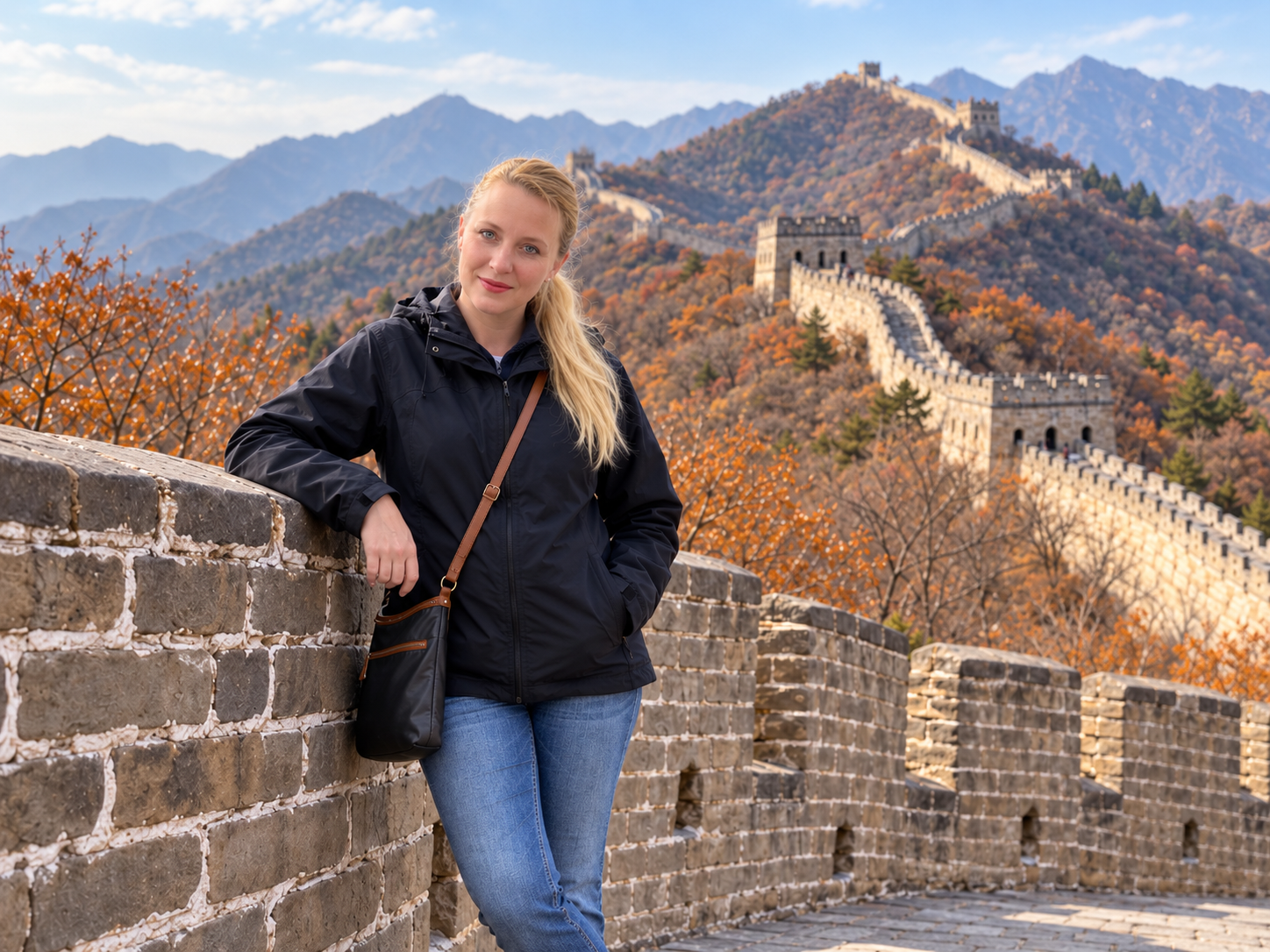
And then there was the Great Wall. I visited it during my time in China, and I have photographs from that experience. I no longer remember which section I visited, and I’d rather be accurate about that than choose a famous section simply because it makes a convenient caption.
There is something extraordinary about the prospect of standing on a structure you’ve known about for most of your life, stretching across a dramatic landscape and representing so many centuries of history. The Wall is one of the experiences I’d encourage visitors to make room for if they’re physically comfortable with the terrain and can arrange the transportation.
If you’re planning your own visit from Beijing, choose the section based on your interests, mobility, transportation needs and the time you have available. Mutianyu is one option worth researching, with managed visitor access and lift options at certain points, but that’s a planning recommendation rather than confirmation of which section I visited. Walking can still involve substantial steps, slopes and uneven surfaces even when some transportation assistance is available.
I’d dedicate a full day to the excursion and pay attention to the forecast, particularly during colder months. A clear, comfortable day can make a considerable difference to how much you enjoy being outside for several hours. Compare the total price of admission, transport, shuttles, cable cars or lifts, and any guide before booking a tour.
Recommended experience: Beijing Great Wall Day Trips →
I love discovering a place through food, but I don’t have a reliable record of the specific restaurants or dishes I ate during my two weeks in Beijing. Rather than invent a favourite noodle shop or pretend I know exactly where I had my best meal, I’d rather share the foods I’d recommend readers investigate and keep my actual personal memories separate.
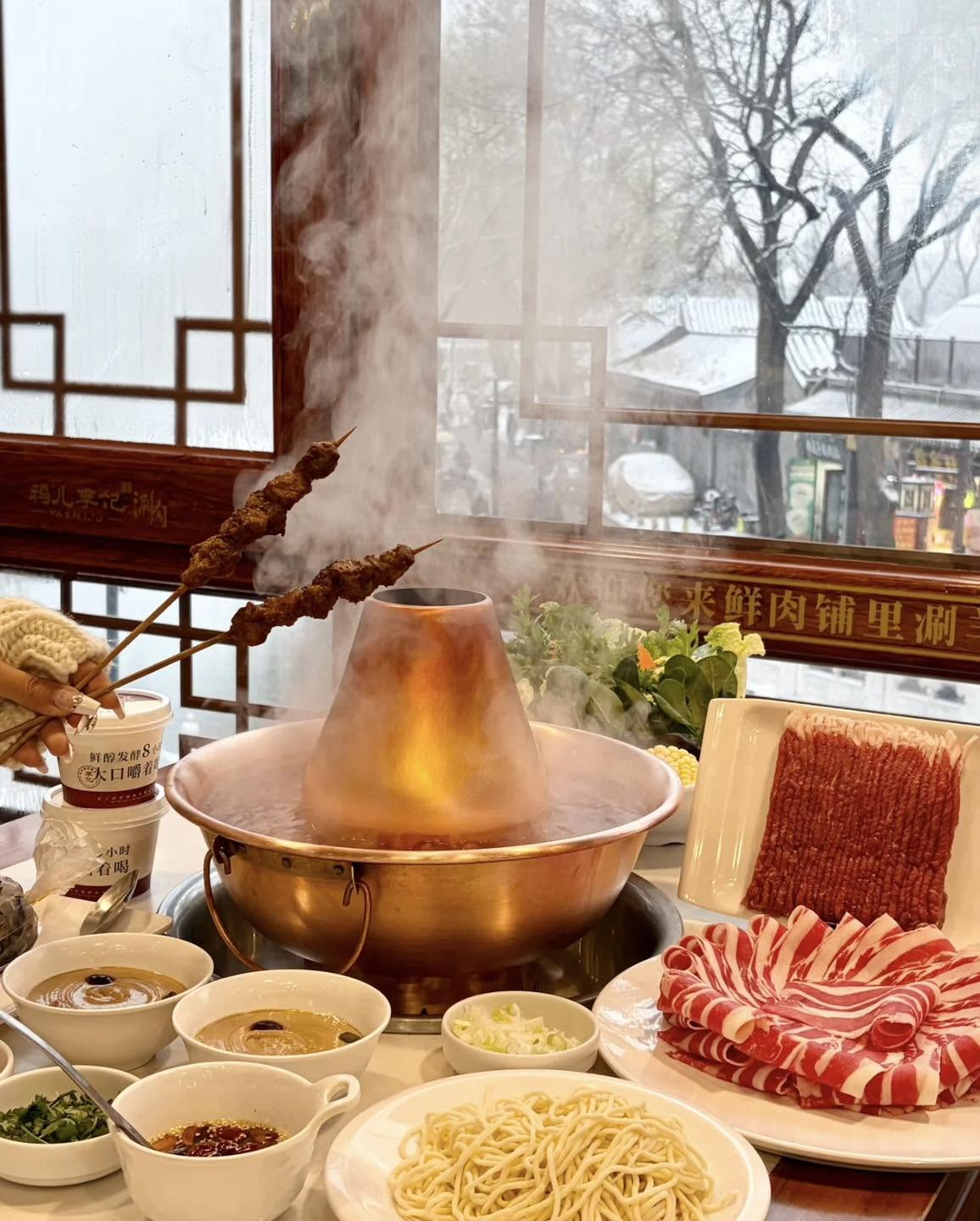
Peking duck is an obvious starting point, particularly if you’re interested in a meal associated so closely with the city. Zhajiangmian, noodles with a rich fermented soybean sauce is another classic Beijing dish, while copper-pot hotpot is especially appealing when the weather turns cold. Tanghulu, the glossy candied fruit skewers often made with hawthorn, is worth looking for at snack stalls, and tea is another way to slow down between busy sightseeing activities.
I would make time for food in the neighbourhood I was already exploring rather than crossing the city solely to check off a restaurant from a list. That’s one of the pleasures of travelling with a little flexibility. Sometimes the place you discover on an ordinary street becomes more memorable than the one everybody told you to visit.
If you have allergies or significant dietary requirements, save a clear explanation in Chinese on your phone and ask about sauces, stocks and cooking ingredients rather than relying on the name of a dish alone. A translation app can help with menus, but it doesn’t replace confirming what you’re actually being served.
During my year in China, I lived in an apartment and also stayed in homestays, boutique properties and hotels while travelling. I don’t have the name of my Beijing accommodation confirmed, so I wouldn’t present a particular hotel as somewhere I personally stayed or recommend a property on that basis.
For a first-time visitor, I’d start by looking at central Dongcheng and the Wangfujing area if convenient access to historic sites is a priority. If you’re attracted to courtyard architecture and traditional streets, explore carefully chosen accommodation around Dongsi or the Drum and Bell Tower areas. Sanlitun may appeal more if you’re particularly interested in modern dining, shopping and nightlife.
The practical details matter more than the photographs. Check the distance to the nearest subway entrance, heating if you’re travelling during winter, luggage access, bathroom facilities and recent reviews. With courtyard-style accommodation, I’d also find out whether cars can reach the entrance or whether I’ll need to walk with my luggage through smaller lanes.
Official resource: China National Immigration Administration: Accommodation Registration for Non-Hotel Stays →
One detail travellers may not realize is that foreign guests staying outside registered hotels generally need to complete accommodation registration with the local authorities within 24 hours of arrival. Hotels handle registration, while other accommodation arrangements may require action by the traveller or host. A nationwide online process was introduced in September 2026, so I’d clarify the current procedure with the accommodation before arrival rather than assume the host has completed everything.
Beijing’s size makes a little advance planning worthwhile. I’d choose a hotel near a useful subway station, group major sights by area and check where the actual visitor entrance is located before leaving. A map pin in the centre of a large park or palace complex won’t necessarily take you to the gate you need.
Beijing has two principal passenger airports: Beijing Capital International Airport (PEK) and Beijing Daxing International Airport (PKX). They aren’t interchangeable, and the rail connections and travel times differ. I’d confirm my arrival airport before booking any transfer and compare the total public transport route with an authorized taxi or prearranged vehicle, especially if arriving with heavy luggage or late at night.
The subway is a practical option for moving around the city, with fares generally based on distance and airport services priced separately. Beijing now supports several methods intended to make entry easier for international visitors, including eligible overseas Visa and Mastercard contactless cards, the Beijing Pass and other ticketing options. I’d still carry a backup in case my particular payment method wasn’t accepted.
Official resource: Beijing City Guide to Subway Tickets, Overseas Cards and Beijing Pass →
I’d also save the name and address of my accommodation in Chinese, along with key destinations and any booking confirmations. It makes it much easier to ask for help, show a driver where you’re going or find the correct entrance without needing a perfect mobile connection.
Internet access deserves its own preparation. Some websites and apps commonly used outside China are restricted on local networks, and the exact experience can vary depending on your service provider. I’d confirm the conditions of any international roaming plan or eSIM before relying on it, download essential information and make sure I can access reservations and contacts offline.
Stay connected: Holafly eSIM →
My own time in Beijing lasted about two weeks, but most people won’t have that luxury. If I were organizing a first-time visit around the main historic sites, I’d aim for five days and keep the arrangement flexible enough to work around tickets and the weather. This is a suggested route, not a day-by-day reconstruction of my actual visit.
Day one – arrive, settle in and get your bearings. I’d arrange the airport transfer, check that my payment apps and mobile connection were working, then take a short walk close to the accommodation. The first day in an unfamiliar city isn’t the moment I’d choose for the most complicated sightseeing plan.
Day two – Tiananmen Square and the Forbidden City. I’d arrange any required reservations before leaving, allow time for security procedures and spend a generous portion of the day exploring the Palace Museum. After that much walking and history, I’d keep the evening relaxed.
Day three – the Temple of Heaven and the hutongs. I’d visit the Temple of Heaven while the historic buildings were open, then spend the afternoon exploring a traditional hutong area, with enough time to stop for a meal or tea along the way.
Day four – the Great Wall. I’d make this the main excursion of the day, choose the wall section in advance, confirm the complete transport arrangements and leave the evening open. If the weather looked significantly better on another day, I’d swap plans where reservations allowed.
Day five – the Summer Palace. I’d allow at least half a day for the grounds and lake, then use the remaining time to revisit somewhere I particularly enjoyed or discover a neighbourhood I hadn’t managed to explore.
With a week or more, I’d slow everything down further rather than automatically add a long list of additional attractions. One of the advantages of travelling through China while living there was having time to learn how things worked and appreciate experiences beyond the obvious sights. I’d want to preserve some of that feeling for a first-time visitor rather than fill every hour.
Beijing can accommodate very different travel styles, from simple neighbourhood meals and public transport to international hotels, private guides and elaborate experiences. I wouldn’t pretend the amount I spent during my visit is a reliable guide to what somebody should budget now, especially when I don’t have complete records of the accommodation and daily expenses.
For planning purposes, a traveller paying for a private room might begin with an allowance of roughly CNY 350–800 for accommodation, CNY 100–220 for food and cafés, CNY 20–60 for local transport and CNY 50–120 averaged across ordinary sightseeing days. Those are broad budgeting assumptions, not quotes or a guaranteed price for any specific season. They also don’t cover international flights, visas, travel insurance, shopping or a separately priced Great Wall excursion.
The figure I’d pay particular attention to is the total cost of the Great Wall day. A tour that appears affordable at first glance may charge separately for admission, transfers, shuttles or lift services. I’d compare the complete experience, including how much walking it involves, before deciding which operator offered better value.
Recommended experience: Beijing Tours and Activities →
I’d begin with entry requirements rather than relying on advice from someone who visited under different rules. Requirements depend on nationality, passport type, purpose of travel and the dates of your trip.
I’d also build the itinerary around confirmed attraction reservations. The Forbidden City, Tiananmen Square and some other major sites use different booking arrangements, and a ticket to one doesn’t necessarily give you unrestricted access to another. Save the confirmations and bring the identification used to make the booking.
The weather is another important consideration. My Beijing visit was in autumn or early winter, and I’d consider autumn again for sightseeing, but I’d prepare for cooler conditions and exposed outdoor spaces. Spring can be windy, summer can be hot and rainy, and winter requires proper cold-weather layers, especially for the Great Wall or the extensive grounds of the Summer Palace. I’d avoid scheduling the Great Wall for the one day with the worst forecast if I had enough flexibility to move it.
Finally, I’d give myself permission to be unfamiliar with the systems. I had the advantage of spending a year in China, so I learned things gradually. A visitor arriving for five days may need to work out payments, reservations, maps and transportation almost immediately. That doesn’t mean the destination is impossible to navigate; it simply means a little preparation and patience can make the experience considerably more enjoyable.
Related read: How to Plan Your First Solo Trip: A Practical Step-by-Step Guide →
Absolutely. I would return for the history, but I wouldn’t organize the entire trip as a competition to see how many monuments I could photograph. I’d revisit places that interested me, wander through more traditional neighbourhoods, find new places to eat and allow time for the conversations and small discoveries that make travelling memorable.
I’d also be interested in seeing how Beijing feels to me now. When I visited, China was the country where I was living and working. It was part of my everyday life, and Beijing was one of the destinations I had the opportunity to explore during that period. Returning from the perspective of someone who has travelled more extensively might draw my attention to completely different things.
I think that’s one of the pleasures of revisiting a place. The buildings may still be standing, but we arrive with different experiences, interests and questions. There’s always a possibility of learning something new, even somewhere we’ve been before.
I’d suggest five full sightseeing days for a comfortable first introduction, particularly if you want a Great Wall day trip. I spent around two weeks and appreciated having more time, but a shorter stay can work if you choose your priorities carefully.
No. I lived elsewhere in China while working as a teacher for a year and spent approximately two weeks visiting Beijing during that time. My comments about work–life balance and daily life refer to the wider experience of living in China, not to having a job in Beijing.
Yes, but I’d prepare translation tools and save important place names and addresses in Chinese. Don’t assume every driver, shopkeeper or staff member will speak English, especially when you’re trying to explain a specific problem or dietary restriction.
Yes. The Palace Museum currently requires advance booking and does not sell same-day admission. It also normally closes on Mondays, apart from statutory holidays. Check the official arrangements for your dates.
Supported international cards can be linked to certain mobile-payment systems, and eligible cards may be used directly at Beijing subway gates. Compatibility varies, so I’d prepare more than one payment option and carry a little cash.
I visited the Great Wall and have photographs, but I don’t remember the section confidently enough to name it. The Mutianyu information in this article is a recommendation to research, not a claim about the location of my own visit.
I think it’s an excellent choice if you enjoy history, culture and architecture, provided you’re prepared for the scale of the city and its booking arrangements. It provides an extraordinary introduction to one part of China, but I’d encourage visitors to remember that the country extends far beyond its capital.
When I think about Beijing, I remember standing in places I’d learned about long before I ever imagined I’d live in China. The imperial palaces, ceremonial buildings, traditional lanes and Great Wall all belong to an extraordinary historical landscape, and I’m grateful I had enough time to experience them without turning the visit into a frantic stopover.
But the reason that journey still matters to me has as much to do with the year surrounding it as the monuments themselves. Living and teaching in China was a chapter I enjoyed. I appreciated my work, the opportunities I had to travel and the kindness I encountered, even when language and cultural differences made everyday interactions unfamiliar. I liked the structure more than some people might expect, and I enjoyed learning the technology and routines that helped me feel at home there.
I also know that my experience isn’t a universal description of China. A country that large and complex can’t be reduced to one person’s happy memories, any more than it can be understood entirely through news headlines. Both things can be true: there are serious questions and different perspectives about life in China, and I can still honestly say that I loved the year I spent there.
Beijing added history and scale to that personal experience, but it was the combination of people, everyday life and the opportunities to explore that made the chapter memorable. If I returned, I’d want to see more, learn more and experience the city without assuming I already knew it simply because I’d spent two weeks there once before.
That’s what travel continues to offer me. The chance to be curious, to discover how other people live and sometimes to find that the most meaningful part of a place isn’t the thing everybody told you to photograph.
Affiliate disclosure: This article contains affiliate links. If you book through them, I may earn a commission at no additional cost to you.